









Glossary
Septoplasty
Septoplasty is surgery that repositions, removes or scores deviated nasal septal cartilage and bone so both nasal passages can share airflow more evenly.
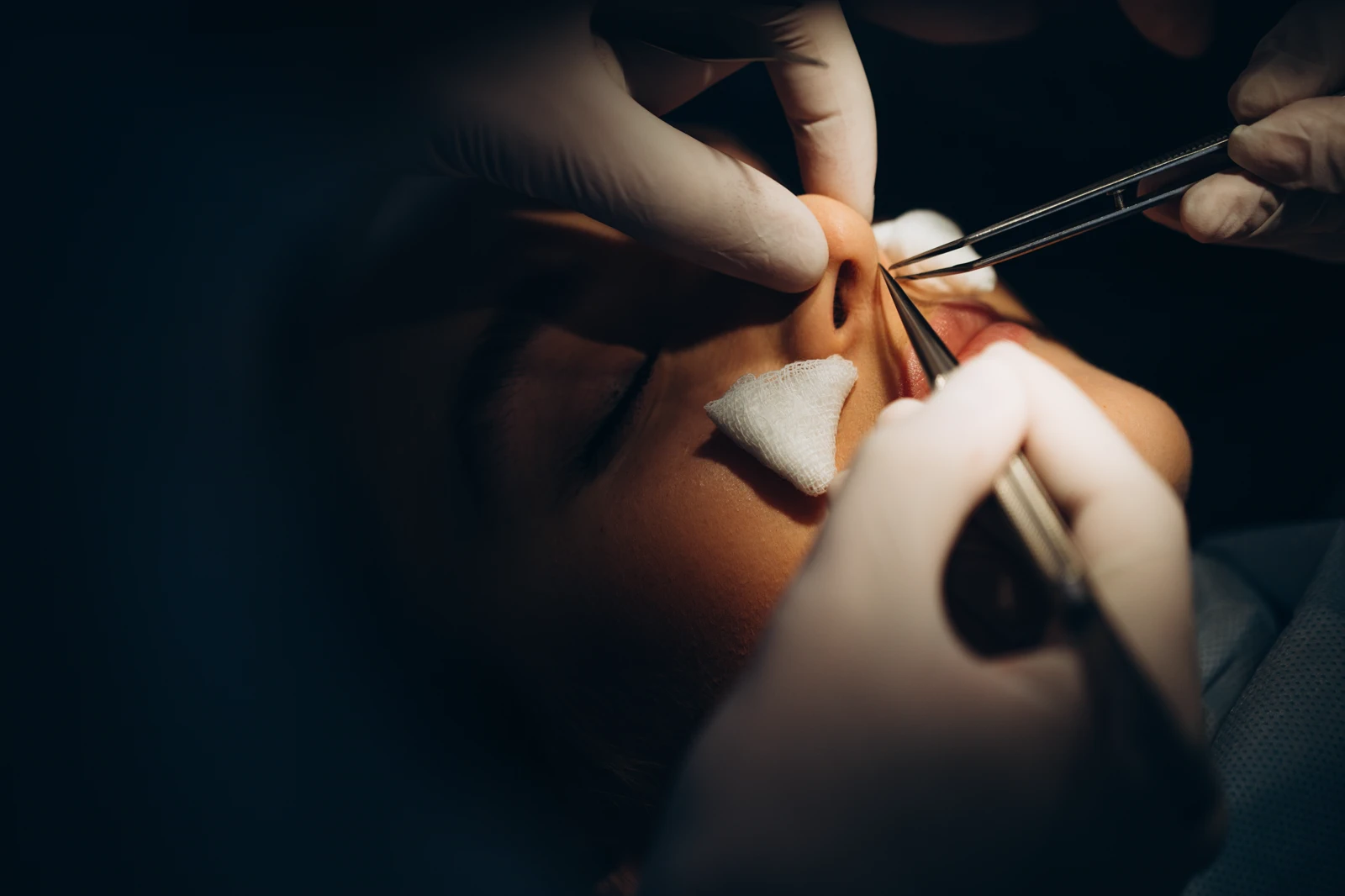
Septoplasty works through internal incisions to free the septal flap, remove or reshape bent segments, then stabilize the midline with sutures or splints. It targets function first, although subtle external changes can follow because the caudal septum supports the columella.
Imaging and anterior rhinoscopy document deviation angles. Turbinate work may appear on the same quote when valve narrowing contributes to obstruction.
Ask recovery timelines for splints, saline rinses and contact sports. Clarify whether cartilage earmarked for grafts still supports the L-strut so cosmetic plans remain safe.
Logging saline rinse frequency alongside a simple zero-to-ten airflow score each evening turns subjective healing into trendlines your ENT can interpret at follow-up. Crusts soften more safely with prescribed emollient drops than with fingernail picking, which lowers the odds of late epistaxis when mucosa is still thin. Confirm how heavy lifting or contact sports align with scheduled endoscopic checks so enthusiasm in the gym does not outpace structural readiness.

Frequently asked questions
Does septoplasty change the outside shape of my nose?
How long until I breathe normally after septoplasty?
Can septoplasty fail later?
Further reading




