









Glossary
Eyelid ptosis
Eyelid ptosis is low resting height of the upper eyelid because the lifting apparatus—levator muscle, aponeurosis, or nerve supply—functions weakly or the lid is weighed down.
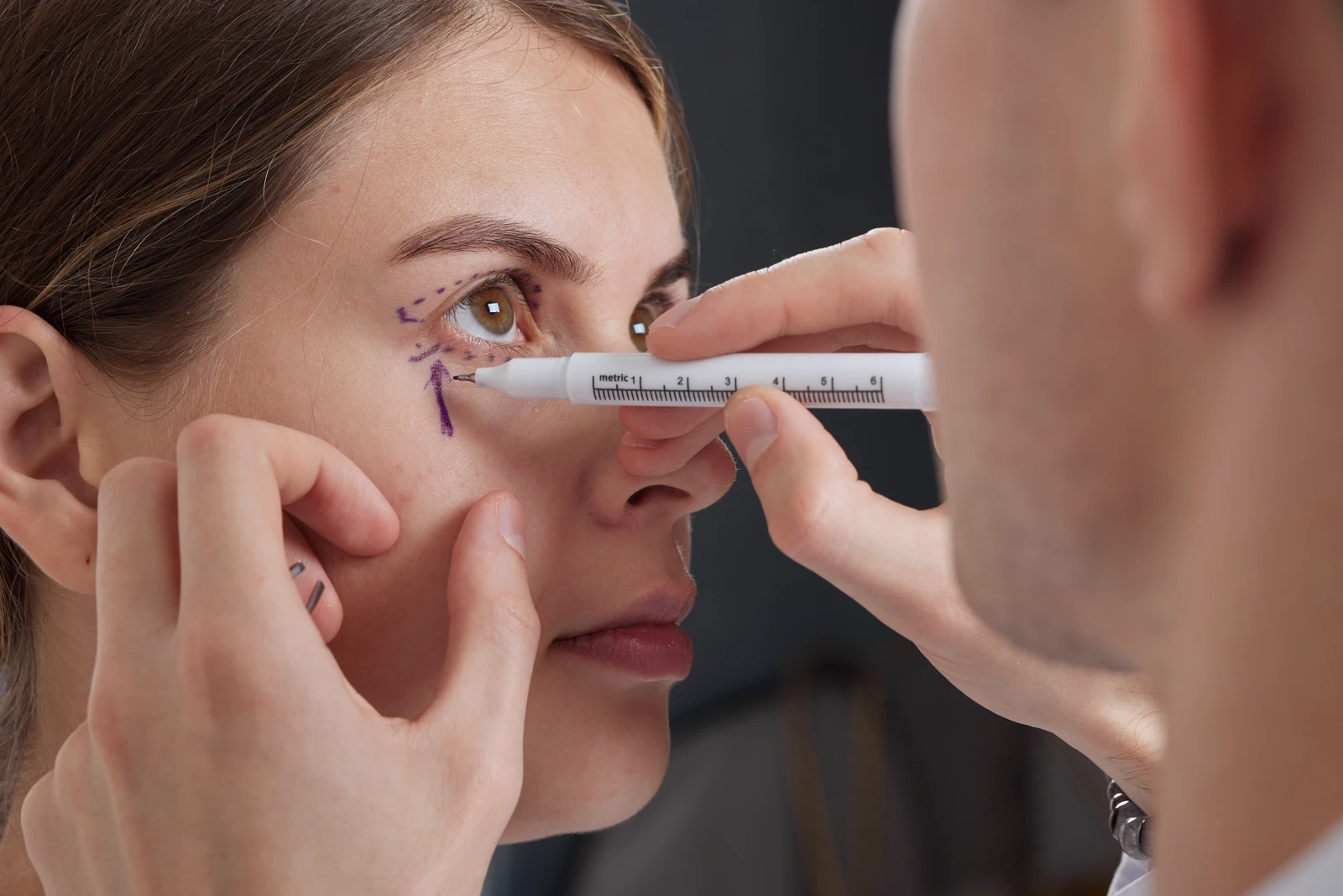
Eyelid ptosis describes a margin that sits lower than expected while the eye is looking straight ahead, narrowing the palpebral fissure. Causes range from age-related stretching of the levator aponeurosis to congenital dysgenesis, third nerve palsy, myasthenia gravis, or mechanical traction from fat prolapse and scarring. Measurement in millimetres relative to the pupil centre documents severity.
Aesthetic consultations pair the word with photos showing tired appearance or asymmetric alertness. Pure upper blepharoplasty removing skin does not correct true levator ptosis; combining procedures changes consent and recovery expectations. Insurance cover differs by documented visual-field obstruction.
If your assessment lists eyelid ptosis, clarify whether surgery targets muscle advancement, aponeurosis plication, or Müller muscle resection and how dry eye is screened beforehand. Discuss contact lens hiatus, bruising timeline, and staged correction if one side is underactive neurologically.

Frequently asked questions
Will ptosis repair remove my eyebags?
Can ptosis return years later?
Is simultaneous brow lift mandatory?
Further reading




