









Glossary
Ectropion
Ectropion is an outward rotation of the eyelid margin, often the lower lid, so the inner lining is exposed and the eye may water or feel irritated.
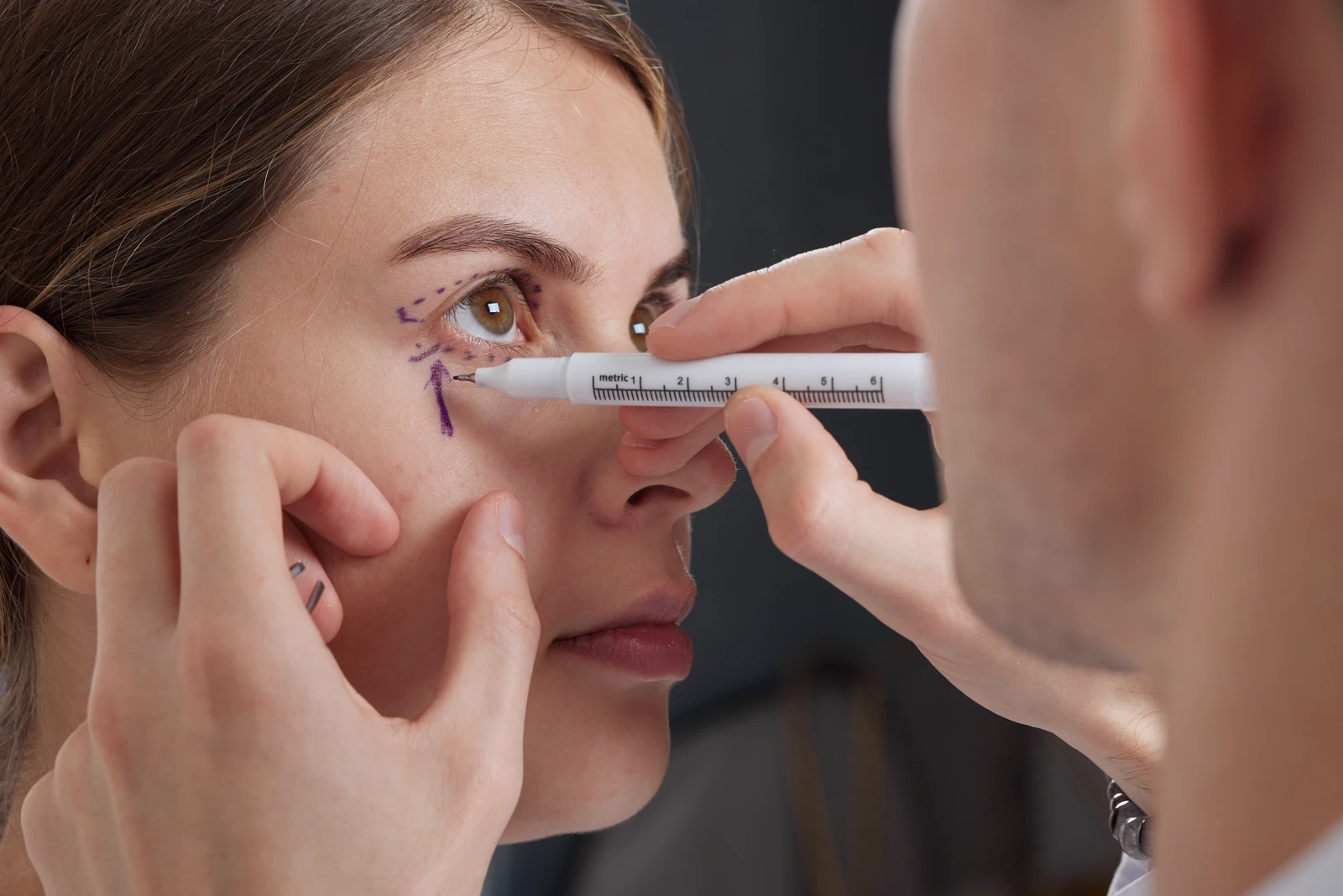
Ectropion means the eyelid margin turns away from the eyeball instead of resting against it. The lower lid is affected most often, leaving conjunctiva visible and reducing the lid's ability to spread tears. Causes include age-related laxity, scarring after trauma or surgery, facial nerve weakness, or chronic sun damage.
During blepharoplasty planning, surgeons look for ectropion because removing skin without supporting the lid can worsen outward pull. Symptoms include watering, redness, foreign-body sensation, and sometimes corneal drying if the tear film breaks up. Mild cases may be managed with lubricants while definitive repair is scheduled.
If ectropion is noted on your assessment, ask whether correction uses a tightening procedure, a graft, or canthoplasty and whether it will be combined with fat or skin removal. Clarify expected recovery of lid position and when ointments versus drops are used.

Frequently asked questions
Can lower blepharoplasty cause ectropion?
Is ectropion always permanent without surgery?
Further reading




