









Glossary
Chronic anal fissure
A chronic anal fissure is a tear in the lining of the anal canal that has not healed after six to eight weeks.
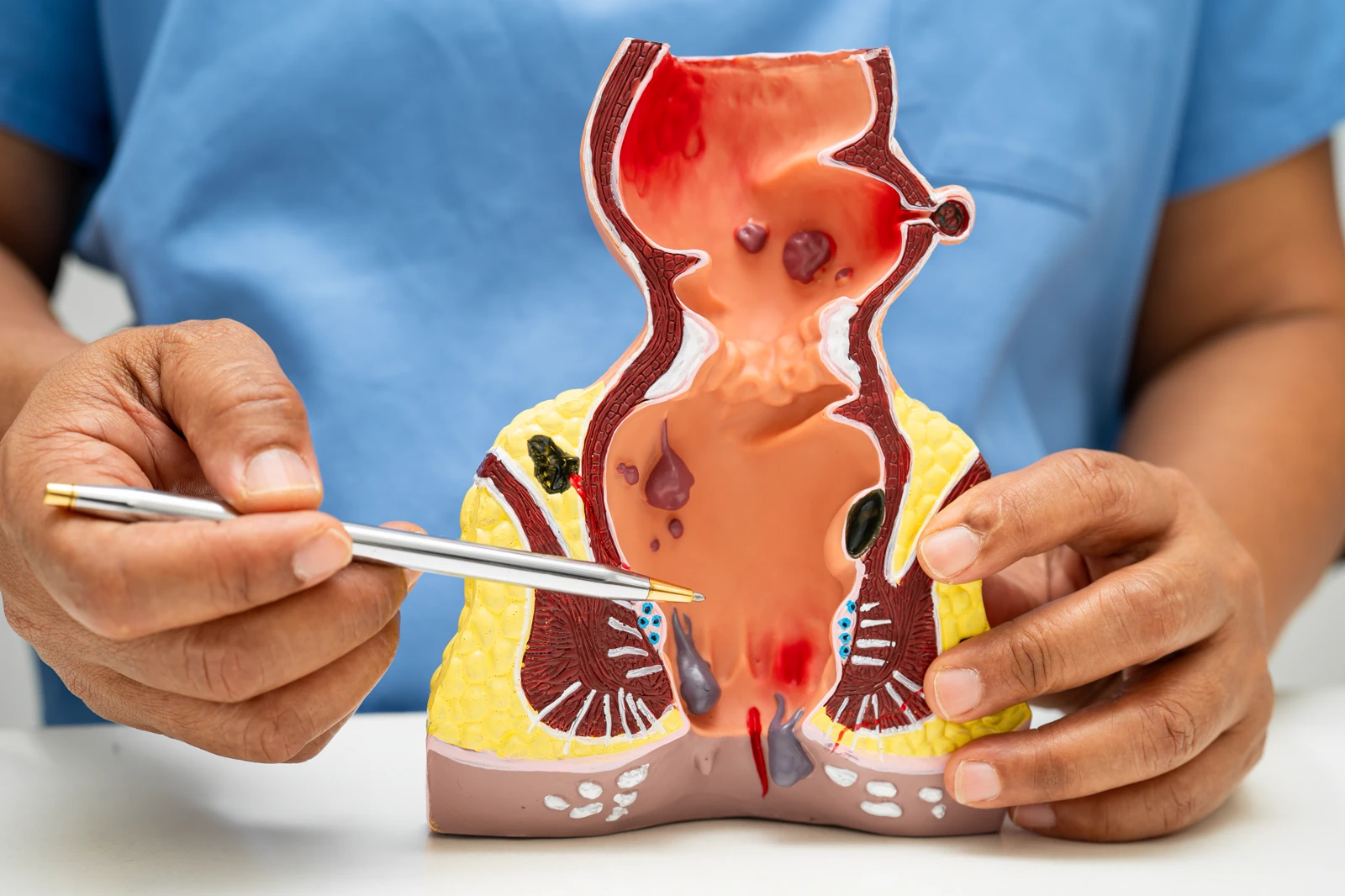
A chronic anal fissure is a split in the skin lining the lower anal canal that has persisted for more than six to eight weeks. It usually lies in the midline at the back, and over time its edges harden, a small skin tag forms outside it (a sentinel pile) and fibres of the internal sphincter may become visible at its base.
Unlike a fresh tear, it keeps hurting because it sits over a tight, spasming sphincter whose reduced blood flow makes healing difficult. The typical picture is sharp pain during and after a bowel movement, lasting minutes to hours, with a streak of bright red blood on the paper. It comes up when initial measures such as fibre, fluids and warm baths have not worked.
Treatment usually starts with topical diltiazem or glyceryl trinitrate ointment, sometimes botulinum toxin, and moves to surgery, most often lateral internal sphincterotomy, if these fail. Ask about the small risk of minor continence problems after sphincterotomy, and why a fissure off the midline may need tests for Crohn's disease or other causes.

Frequently asked questions
How long before an anal fissure is called chronic?
Does surgery for a chronic anal fissure affect bowel control?
Why does a chronic anal fissure keep hurting?
Further reading




