









Glossary
Anal fissure
An anal fissure is a small tear in the lining of the lower anal canal that causes sharp pain during and after bowel movements.
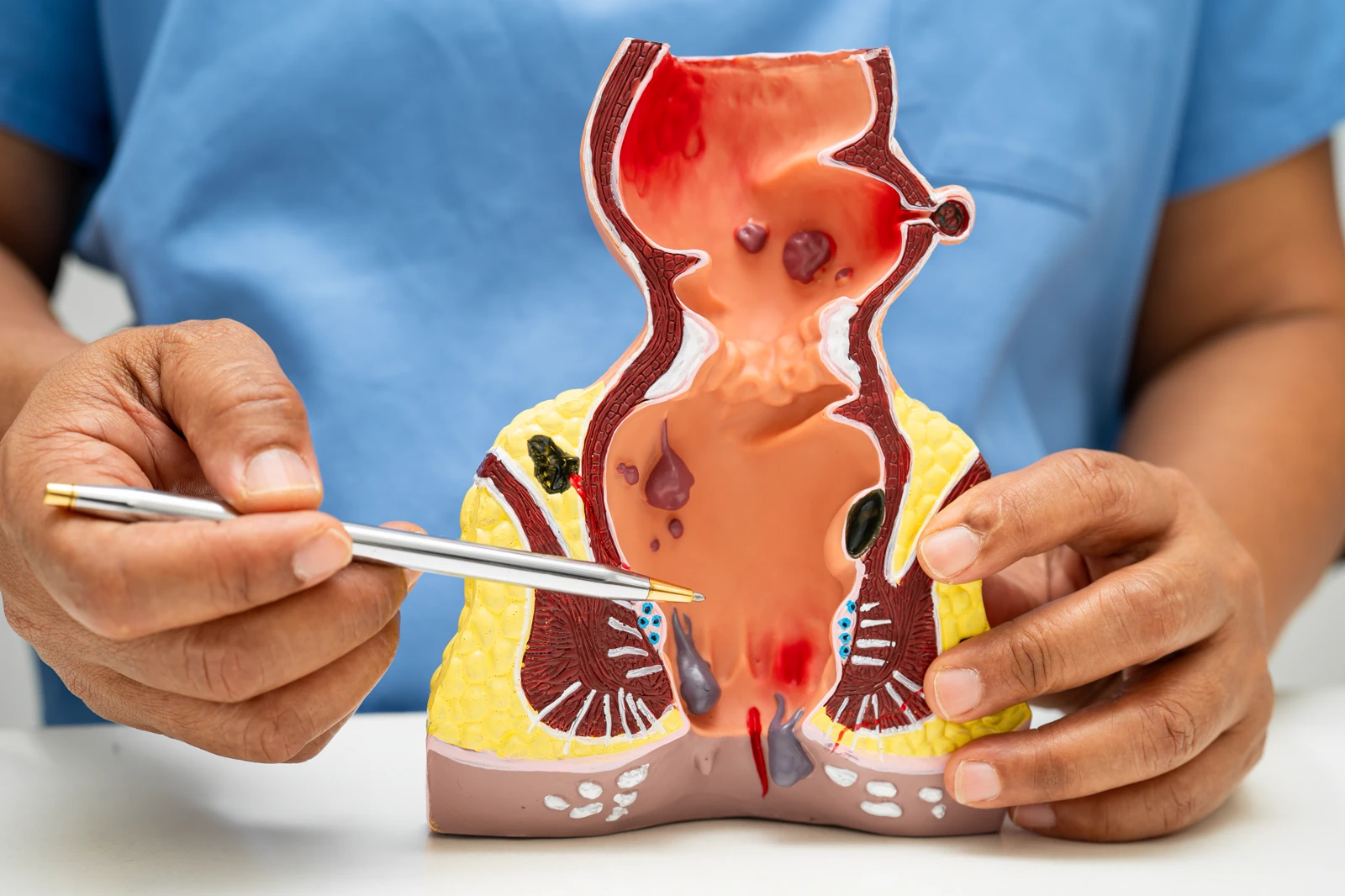
An anal fissure is a small split in the delicate skin lining the lower anal canal, most often in the midline at the back. It typically causes sharp, tearing pain during a bowel movement, followed by burning or spasm that can last from minutes to several hours, and often a streak of bright red blood on the paper.
Fissures are classed by duration. Acute ones, present for under six weeks, often heal with softer stools, fibre, fluids and warm baths. Chronic fissures last longer, tend to show fibres of the internal sphincter muscle at the base, and may be accompanied by a skin tag or a small fleshy bump at the upper end. Persistent spasm and reduced blood flow in that muscle are thought to prevent healing. Creams that relax the sphincter or Botox injections are used first; surgery, usually a lateral internal sphincterotomy, is considered when these fail.
A fissure that sits off the midline, bleeds heavily, or fails to improve should be examined for other causes such as Crohn's disease or infection. Ask whether the plan aims to relax the muscle or only to soften the stool.

Frequently asked questions
How long does an anal fissure take to heal?
Is bright red blood after passing stool always a fissure?
Does an anal fissure need surgery?
Further reading




