









Glossary
Breast lump
A breast lump is a distinct area of thickening or swelling felt within breast tissue that feels different from the tissue around it.
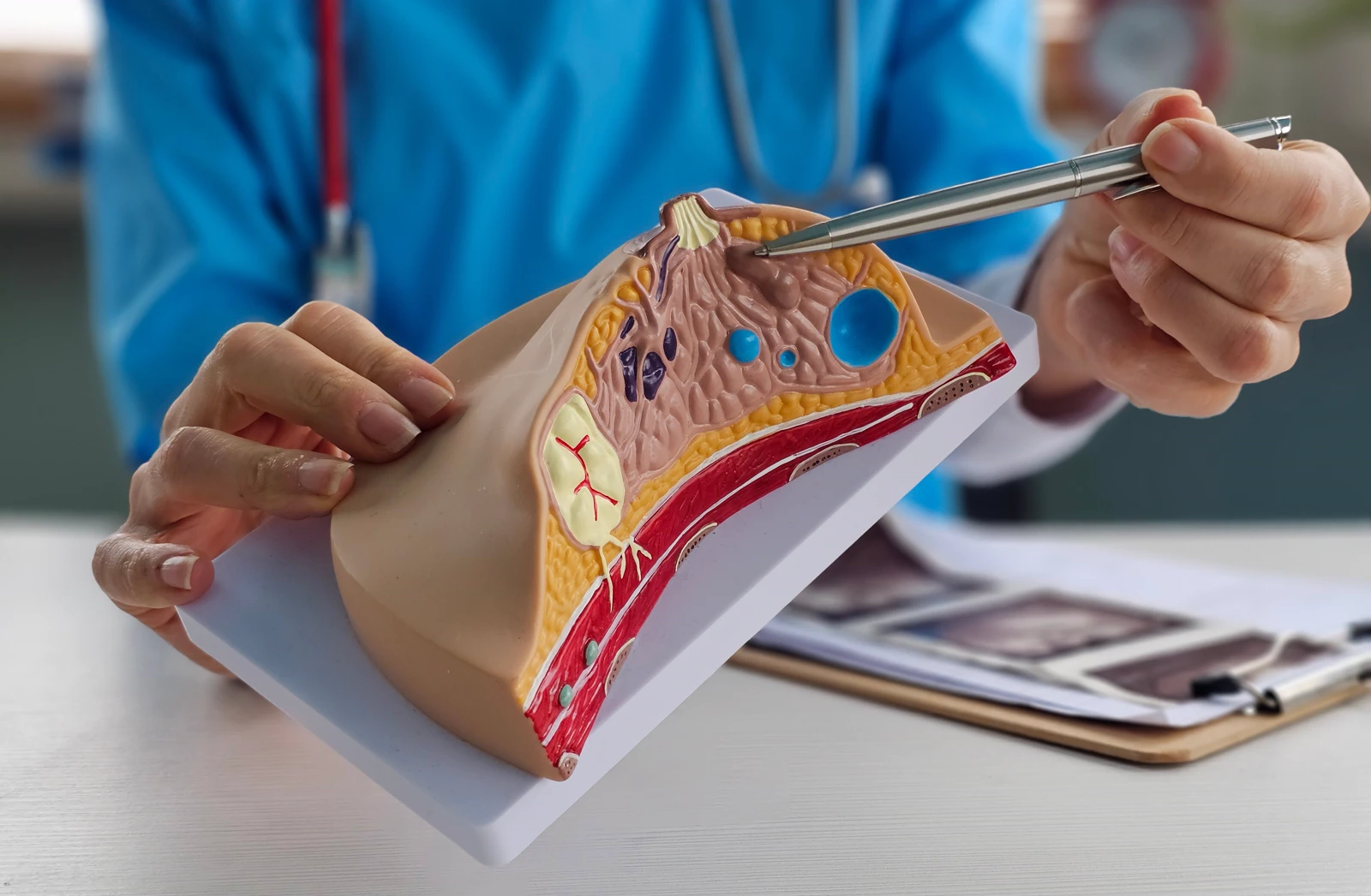
A breast lump is a localised swelling or area of thickening that can be felt in the breast and feels different from the surrounding tissue. It may be round or irregular, firm or soft, fixed or mobile. Most lumps turn out to be benign, such as a fluid-filled cyst or a fibroadenoma, but only assessment can tell which kind it is.
You meet the term when you find something yourself, or when a doctor notes a palpable finding during an examination. Appearance on the skin, nipple discharge, pain and a family history of breast cancer are all recorded because they guide the work-up. Many lumps change with the menstrual cycle, so a lump that persists beyond one full cycle deserves an examination rather than waiting.
Assessment typically combines a clinical examination, imaging and, when needed, a needle biopsy. Ultrasound is the usual first test under about 40, and mammography is added for older women. A scan alone does not give a final answer, so ask what result would lead to a biopsy and how long you will wait for the report. Do not rely on the feel of a lump to judge it.

Frequently asked questions
Is every breast lump cancer?
How soon should a new breast lump be checked?
Which tests are used to examine a breast lump?
Where this term comes up
-
Breast Mass Excision / Biopsy
Breast mass excision or biopsy removes or samples a breast lump to obtain a diagnosis and guide treatment. The choice depends on the clinical findings.
Further reading




