









Glossary
Anal stenosis
Anal stenosis is a narrowing of the anal canal, usually from scarring, that makes passing stool difficult or painful.
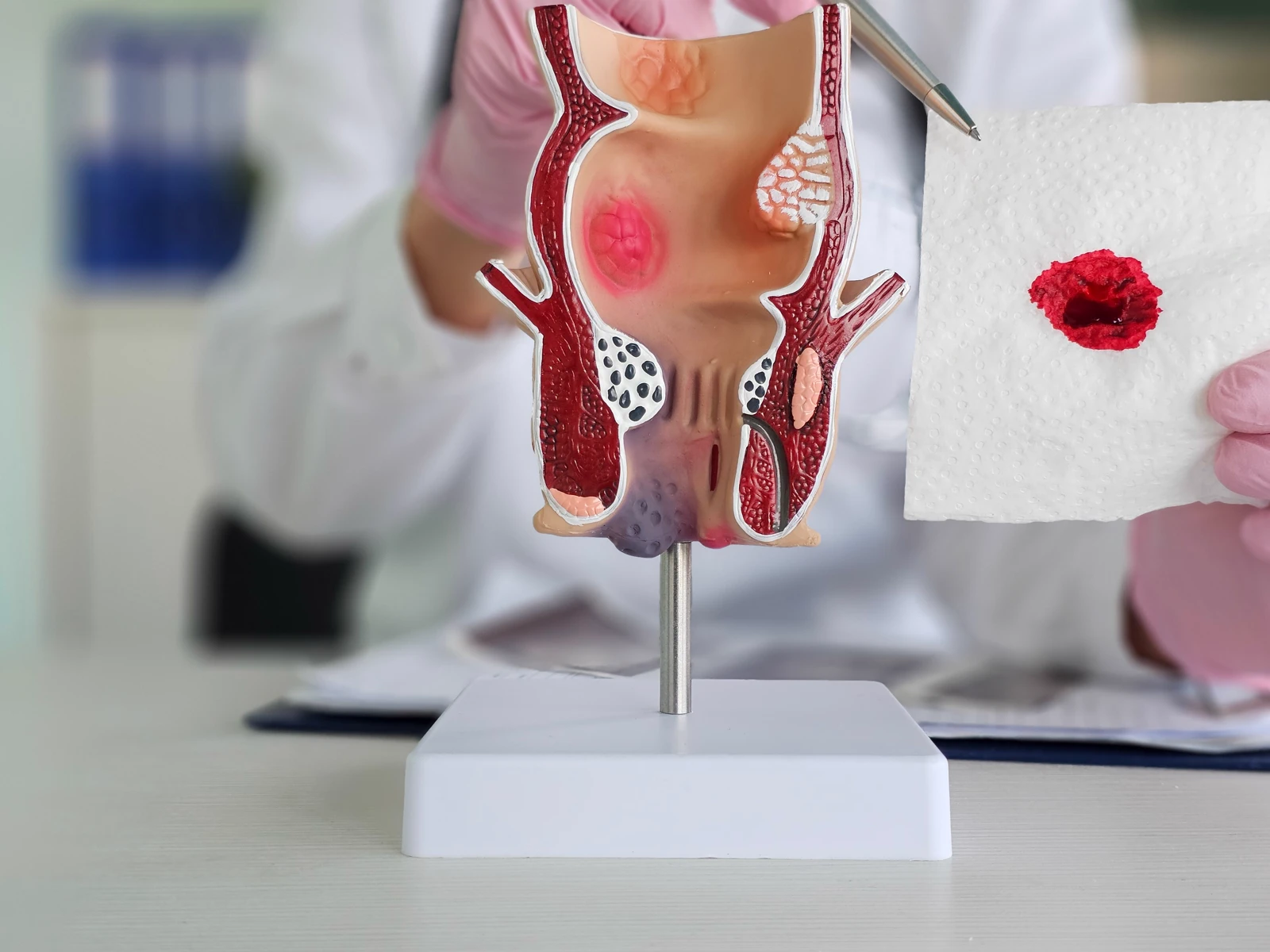
Anal stenosis is a fixed narrowing of the anal canal, in which scar tissue has replaced the normally elastic lining and the opening no longer stretches. Patients notice thin, pencil-like stools, straining, pain with bowel movements, and sometimes small tears and bleeding because the tight canal splits when stool passes.
The commonest cause is scarring after an anal operation, particularly an extensive haemorrhoidectomy that removed too much skin between the wounds. Chronic fissures, radiotherapy, inflammatory bowel disease, repeated laxative abuse and long-standing anal fistula can also scar the canal. This is why surgeons try to leave bridges of healthy skin between wounds. Mild stenosis is managed with stool softeners, fibre and gentle dilatation. Established scarring may need an anoplasty, a procedure in which healthy skin is advanced into the canal as a flap to widen it.
Examination, and sometimes imaging, is needed to separate a scar from a tumour or a spasm of the sphincter, which can feel similar. Ask which of these causes applies to you, and whether the plan involves stretching, a flap or both.

Frequently asked questions
Can anal stenosis happen after haemorrhoid surgery?
How is anal stenosis different from an anal fissure?
Does anal stenosis always need surgery?
Further reading




