









Glossary
Anal canal
The anal canal is the last three to four centimetres of the digestive tract, running from the rectum to the anal opening.
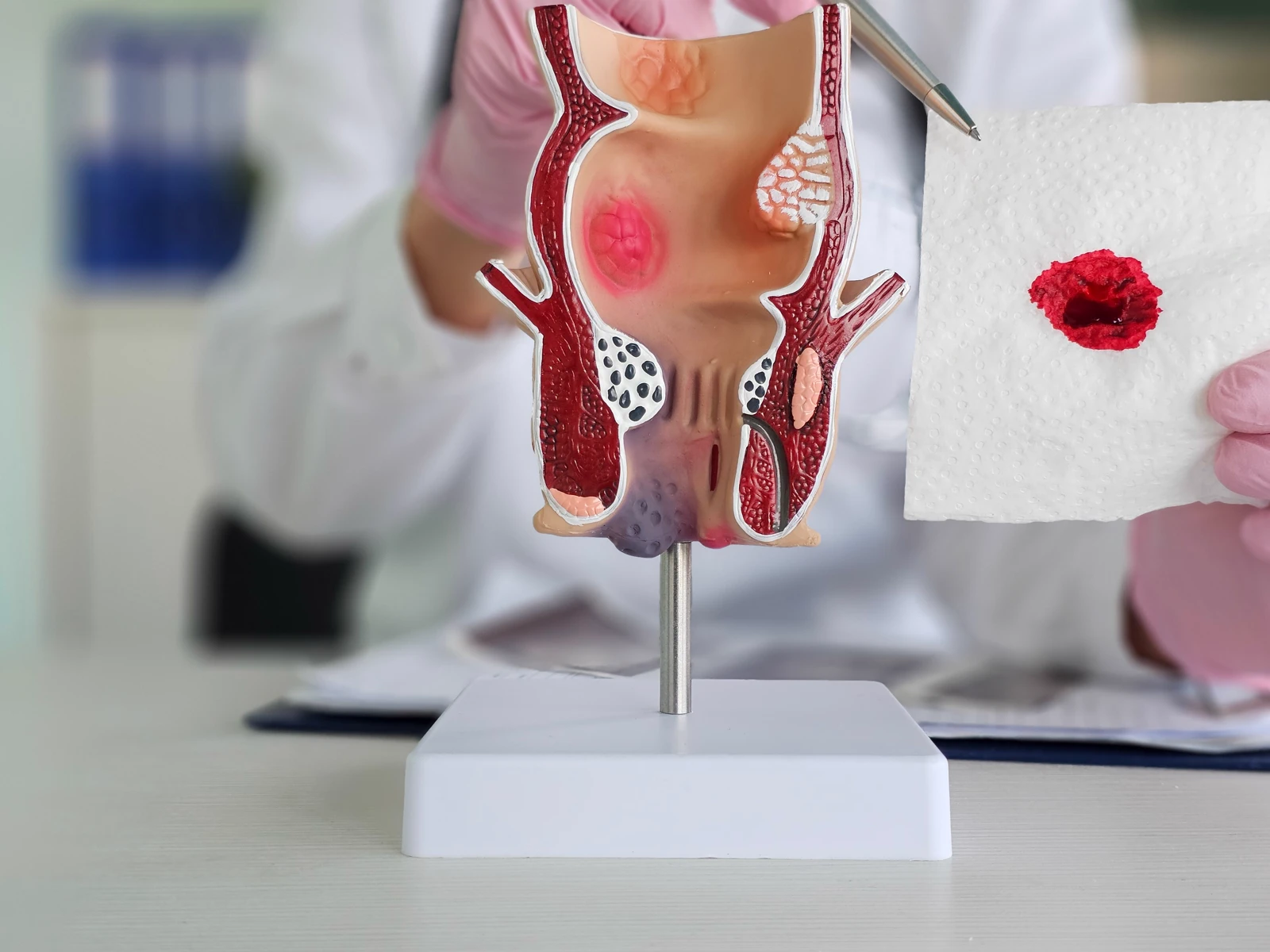
The anal canal is the final three to four centimetres of the digestive tract, running from the lower end of the rectum to the anal opening. Below the dentate line it is lined by pain-sensitive squamous tissue, and above it by mucosa without the same sensitivity. The internal and external sphincter muscles close around it.
The term appears in proctology and surgery reports because most anal conditions are described by where they sit relative to this canal and the dentate line. Internal haemorrhoids arise above the line and are often painless, while fissures, which lie below it, hurt. Fistula tracts begin from small glands within the canal wall. A surgeon examining the canal by touch or with a short instrument called an anoscope can see only this short segment.
Its length, about 4 cm, is why anal surgery is a small-area operation in which a few millimetres of tissue matter. If a report mentions the length or tone of the canal, ask what was measured and whether it relates to pain, bleeding or leakage.

Frequently asked questions
Where does the anal canal end and the rectum begin?
Why is the dentate line mentioned when describing anal problems?
Can the anal canal be examined without surgery?
Further reading




