









Glossary
Otoplasty
Otoplasty sets back prominent ears by reshaping cartilage, sewing the antihelix, and using head dressings that control rebound while nerves recover behind the ear.
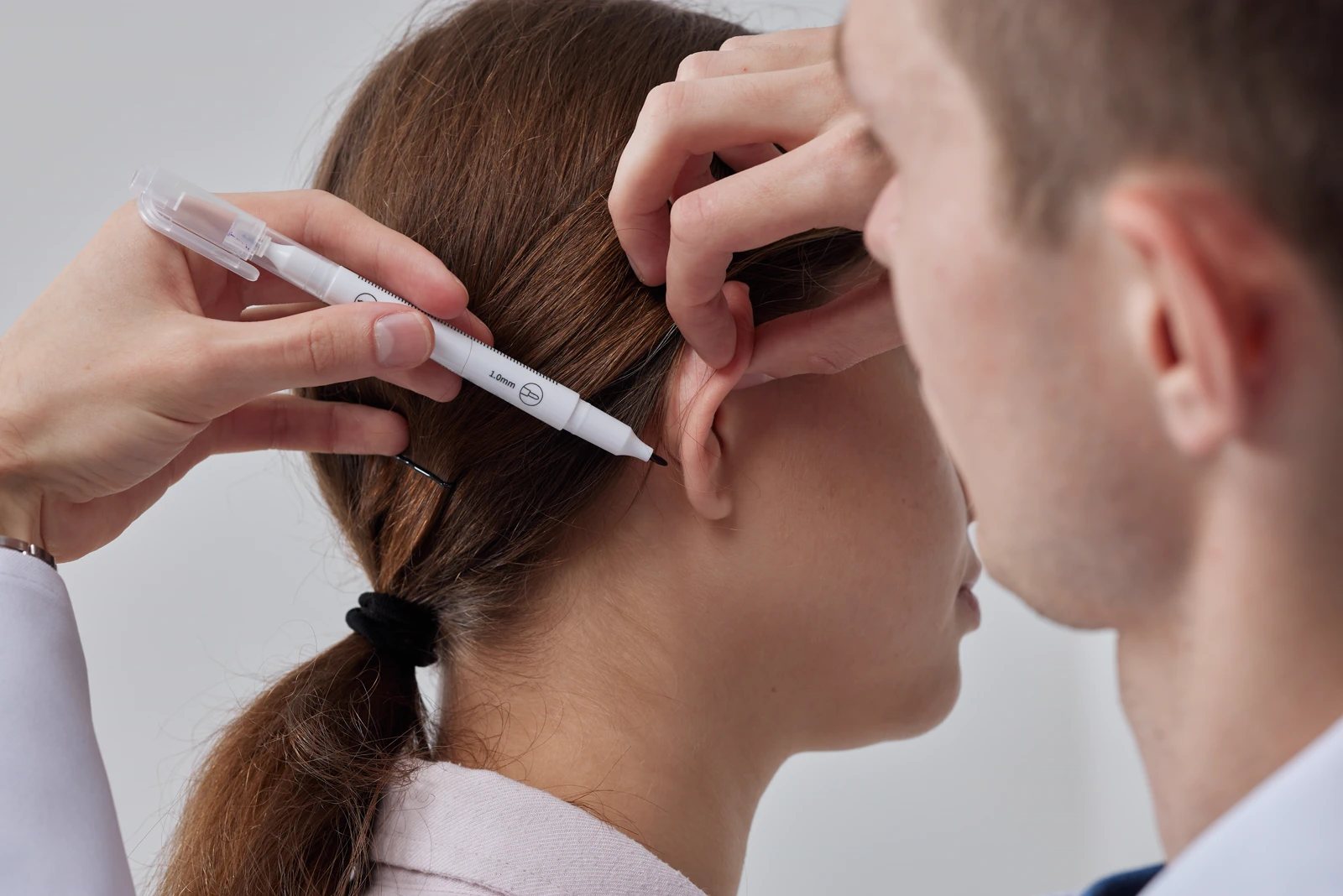
Otoplasty addresses cupped or projecting ears by weakening selected cartilage, placing Mustarde-type mattress sutures, and sometimes thinning the conchal bowl so the helical rim sits closer to the skull contour without sharp step-offs.
Quotes bundle anesthesia time, head dressing changes, and night-time protective wear because cartilage has elastic memory that can partially rebound during the first postoperative month if compression slips.
If your instruction sheet lists otoplasty, ask about incision placement behind the ear, whether asymmetry correction targets one side only, and when swimming or helmet sports may resume once suture lines mature under hair cover.
Active children may need softer bandage materials to avoid skin irritation, while adults with prior keloids require early silicone therapy. Hematoma risk rises if aspirin is not stopped as instructed, so medication review belongs in the same visit as consent signing.

Frequently asked questions
Will my ears feel numb for months?
Can otoplasty move the ear closer without making it look pinned flat?
What triggers an urgent call after head bandages come off?
Further reading




