









Glossary
Chemical peel
A chemical peel is an acid solution applied to the skin to remove its outer layers in a controlled way and stimulate renewal.
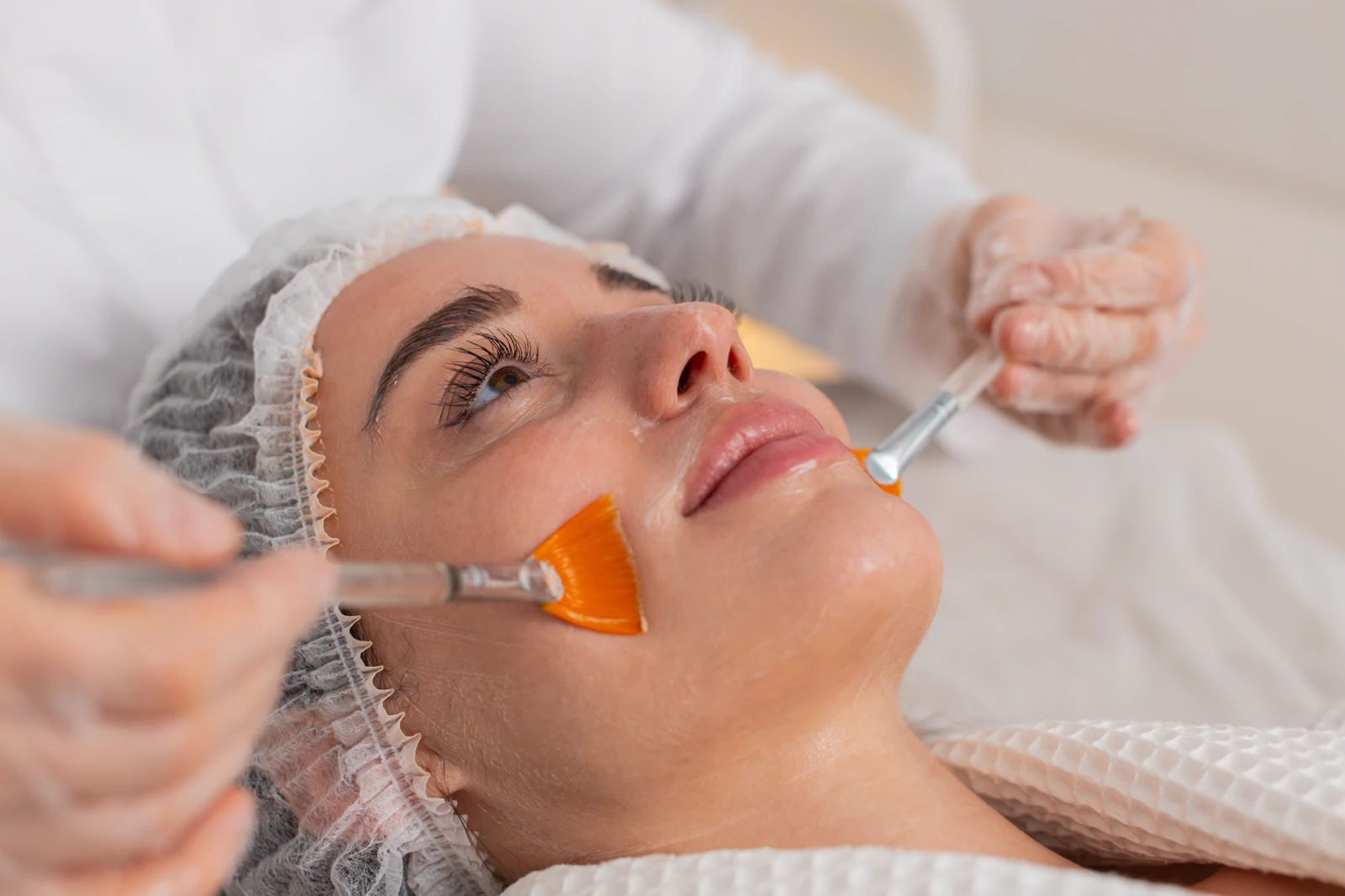
A chemical peel is a treatment in which an acid solution is applied to the skin to dissolve the bonds between dead cells and, depending on strength, to injure the epidermis or upper dermis in a controlled way. The skin then sheds and regenerates, which can soften fine lines, acne marks, uneven pigment and rough texture.
Peels are classed by depth. Superficial peels use glycolic, salicylic or mandelic acid and cause a few days of flaking. Medium-depth peels, often 20 to 35 percent trichloroacetic acid, reach the upper dermis and bring a week or more of crusting and redness. Deep phenol peels are rare today and need monitoring. On a quote, the acid, its percentage and the number of sessions are what matter, since a course of superficial peels is typically spaced 2 to 4 weeks apart.
Ask which depth is planned and how the skin should be prepared. Darker skin types carry a higher risk of post-inflammatory darkening after medium peels, and recent isotretinoin use or an active cold sore are reasons to delay. Strict sun protection afterwards is part of the treatment, not an extra.

Frequently asked questions
How many days will my skin peel after a chemical peel?
Is a chemical peel safe for darker skin?
Can I have a chemical peel while taking isotretinoin?
Further reading




