









Glossary
Canthal tilt
Canthal tilt is the angle between the inner and outer corners of the eye, showing whether the outer corner sits higher or lower.
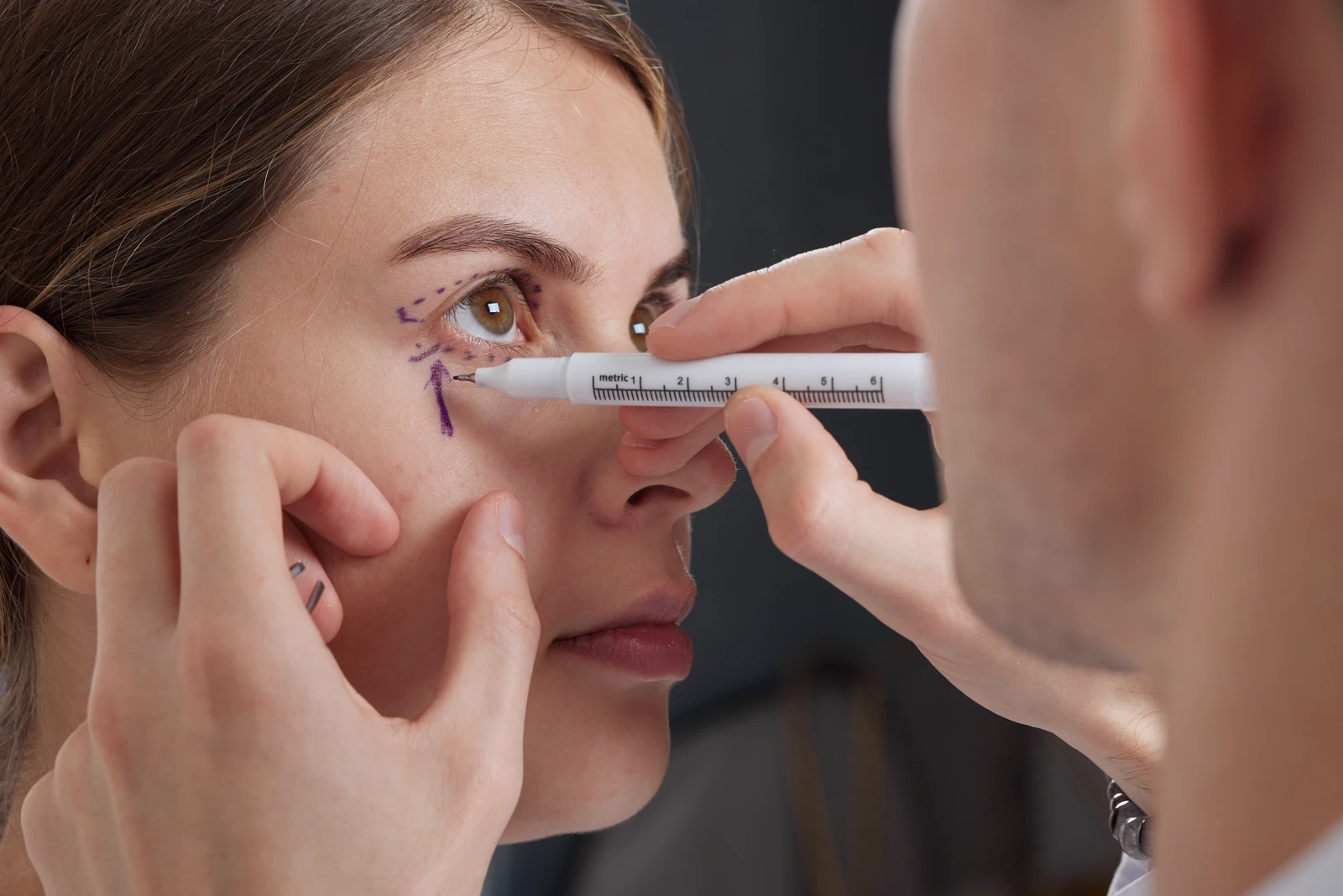
Canthal tilt is the angle formed by an imaginary line through the inner corner (medial canthus) and outer corner (lateral canthus) of the eye, measured against the horizontal. When the outer corner sits higher than the inner one, the tilt is called positive; when level it is neutral; when lower it is negative.
Most faces have a slight positive tilt, with figures of around 4 to 8 degrees often quoted, but norms vary between individuals and ethnic groups. In practice the term appears when planning eyelid surgery: a lower eyelid blepharoplasty or any procedure that weakens the lateral support can lower the outer corner, giving a rounded, tired or 'sad' look. Surgeons then add a canthopexy or canthoplasty to keep or raise the tilt.
On social media 'positive canthal tilt' is promoted as a mark of attractiveness, but it is a measurement, not a goal in itself, and changing the tilt is a different question from preserving it. Ask your surgeon to assess your current tilt, photograph it, and explain whether the planned operation could alter it. Photographs should be taken with the head straight and the eyes looking forward.

Frequently asked questions
Is a positive canthal tilt better than a negative one?
Can eyelid surgery change my canthal tilt?
How is canthal tilt measured?
Further reading




