









Glossary
Buccal fat removal
Buccal fat removal takes out part of the deep cheek fat pad through a small cut inside the mouth to slim the cheek.
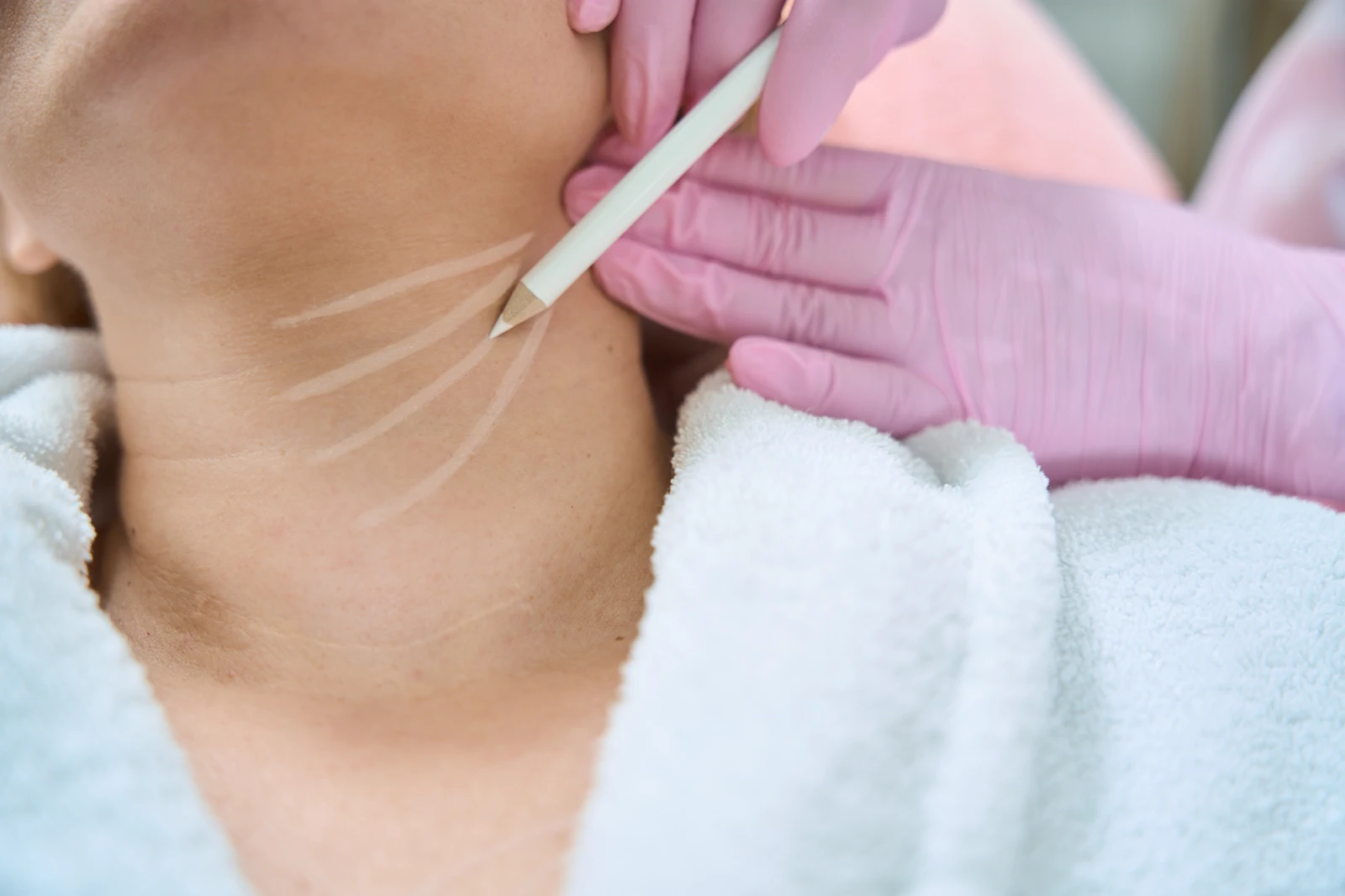
Buccal fat removal, also called bichectomy, is an operation that takes out part of the buccal fat pad through a short incision of about 1 to 2 cm on the inside of the cheek, so no scar shows on the skin. Its purpose is to reduce fullness in the lower cheek and give the face a more angular contour.
On a quote it usually appears as a quick procedure under local anaesthetic, sometimes with sedation, taking roughly 20 to 40 minutes. The surgeon opens the lining of the cheek, gently teases out the pad and removes the portion judged right. Swelling is typical for one to two weeks and the final contour appears over about three months, once the fluid settles.
Candidates are people with a round, full lower cheek whose bone and muscle structure supports it; those who are already slim, or older than about 35 to 40, risk looking hollow as the face ages. Ask how much of the pad will be taken, whether one side may differ from the other, and what the surgeon would do if you want a smaller change. The effect is permanent because the removed fat does not grow back.

Frequently asked questions
Is buccal fat removal reversible?
Will buccal fat removal make my face look hollow with age?
Does buccal fat removal leave a scar on the face?
Further reading




