









Glossary
Anoscopy
Anoscopy is a brief office examination in which a short lighted tube is inserted into the anal canal to inspect the lining for bleeding sources.
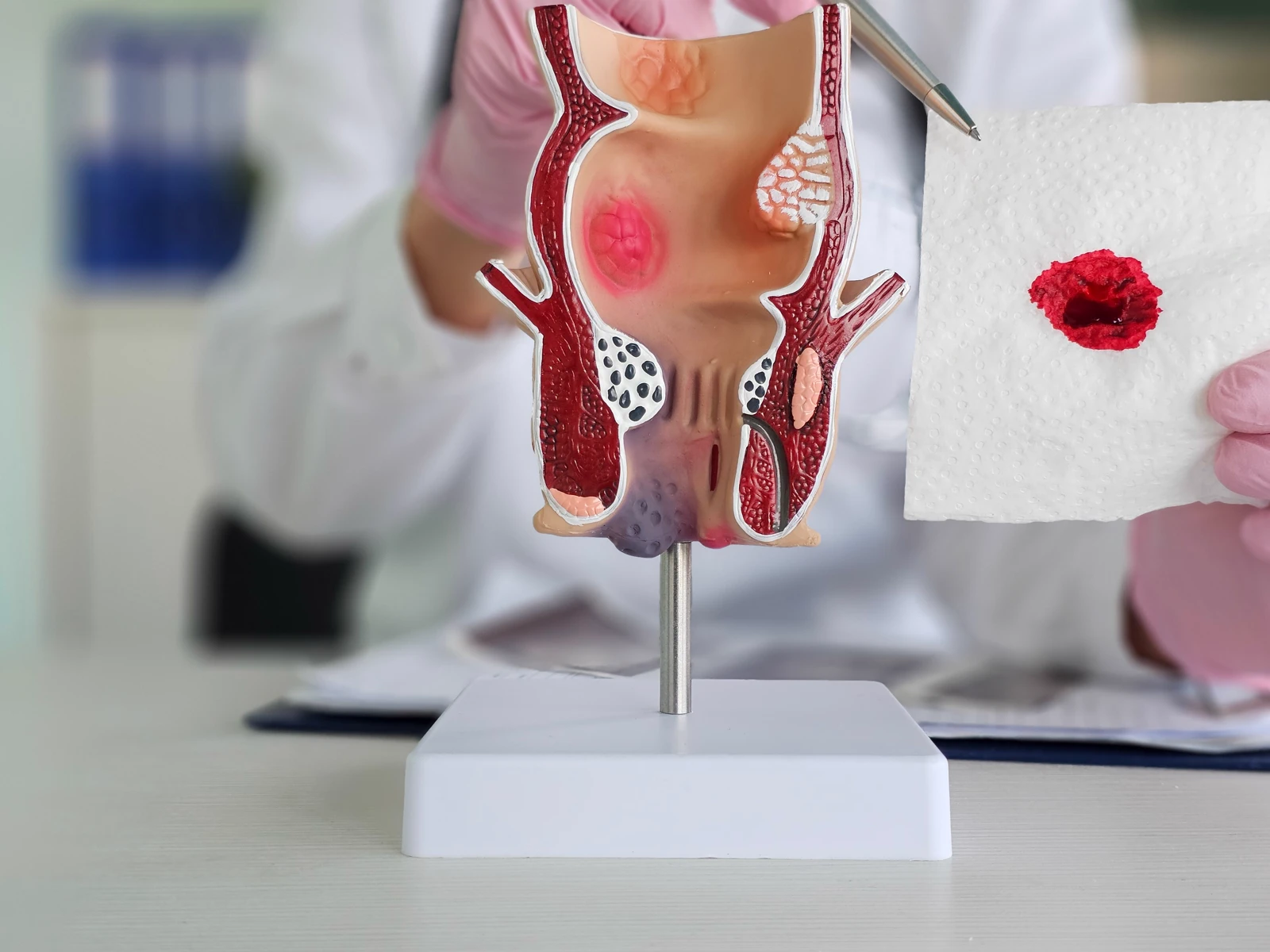
Anoscopy is a direct look at the lining of the anal canal using a rigid or disposable tube a few centimetres long, usually with a built-in light. The examiner gently inserts the instrument after lubrication, often while you lie on your side with knees drawn up. The view reaches only the lower anal canal and the very start of the rectum, not the full colon.
It appears when you report bright red bleeding on the toilet paper, itching, a lump at the anus, or pain during bowel movements. The findings help grade internal haemorrhoids, spot small tears called fissures, and distinguish skin tags from prolapsing tissue. Many clinics perform it in the same visit as a digital rectal examination rather than scheduling separate imaging.
The procedure typically takes one to three minutes and needs no sedation. You may feel pressure or an urge to open the bowels, but it should not require general anaesthesia. Ask whether biopsies are possible through the scope if an unusual patch of lining is seen, and whether a full colonoscopy is still planned if bleeding persists despite a normal anoscopy.

Frequently asked questions
Does anoscopy require bowel preparation like a colonoscopy?
Can anoscopy diagnose all causes of rectal bleeding?
Is anoscopy painful?
Further reading




