









Glossary
Abscess cavity
The abscess cavity is the hollow space inside the tissue that held the pus and remains after an abscess has been drained.
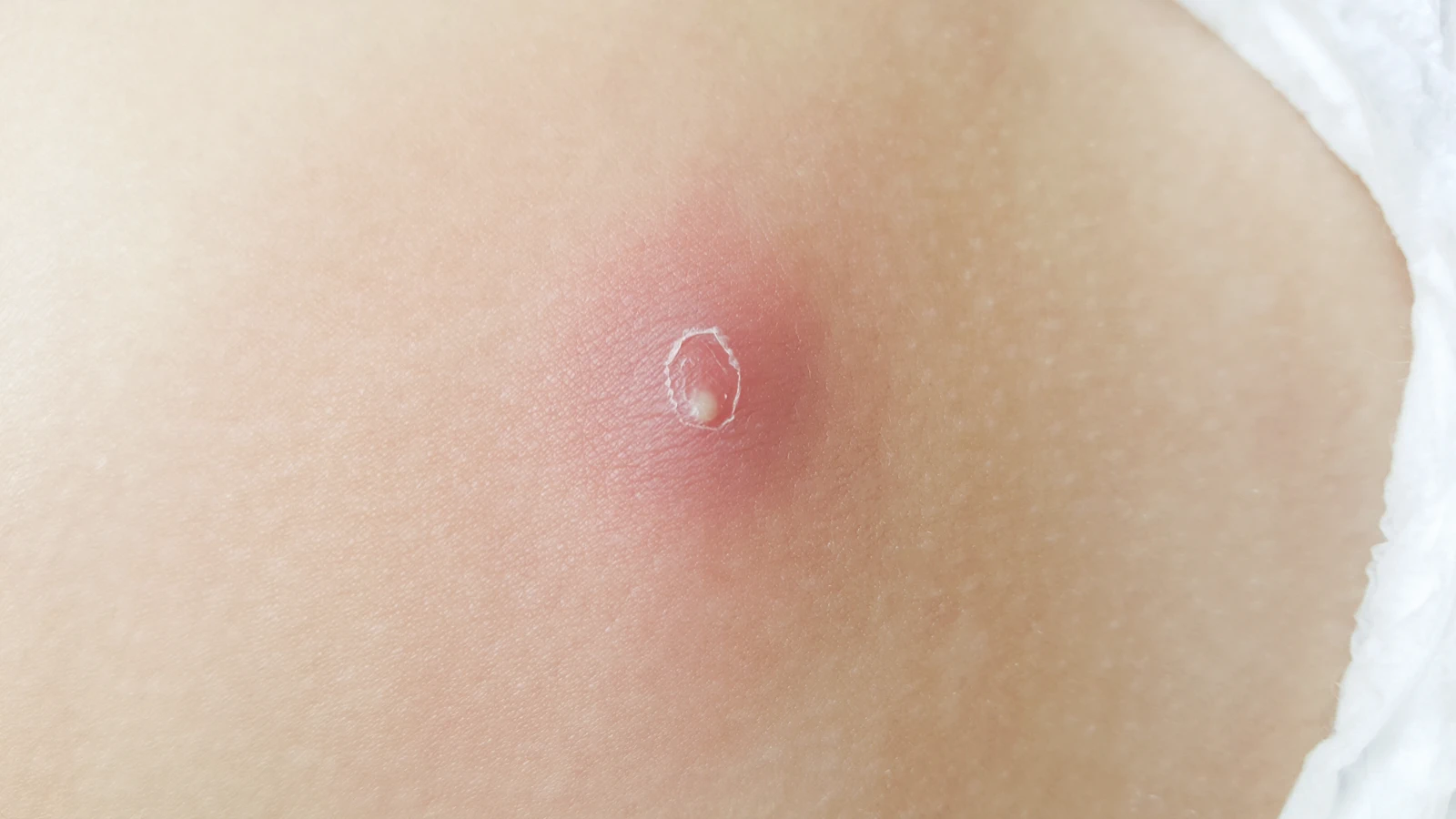
The abscess cavity is the pocket within the tissue that contained the pus and that remains as an empty space once an abscess has been opened and emptied. Its walls are made of inflamed tissue that soon becomes granulation tissue, the red, bleeding surface from which healing starts. Larger cavities are often divided by internal partitions called loculations, which the surgeon breaks down with a finger or instrument so that no separate pocket is left undrained.
The cavity is what the aftercare plan is built around. Depending on its size, it may be irrigated with saline, loosely packed with gauze or a wick, or simply left open with an absorbent dressing. Packing is changed every 1 to 3 days and is gradually reduced as the cavity shrinks. The goal is healing from the base upwards; if the skin seals over before the depth has filled in, pus re-accumulates and the abscess returns.
A cavity of 2 to 3 centimetres usually closes within 2 to 3 weeks, while large or perianal cavities can take 6 weeks or more. Ask how deep the cavity was measured at drainage, as that number tells you roughly how long dressings will be needed.

Frequently asked questions
Why is the abscess cavity packed with gauze instead of being stitched closed?
How can I tell that the abscess cavity is healing properly?
Further reading




