









Glossary
Abscess
An abscess is a walled-off pocket of pus that forms when the body seals off an infection inside a tissue.
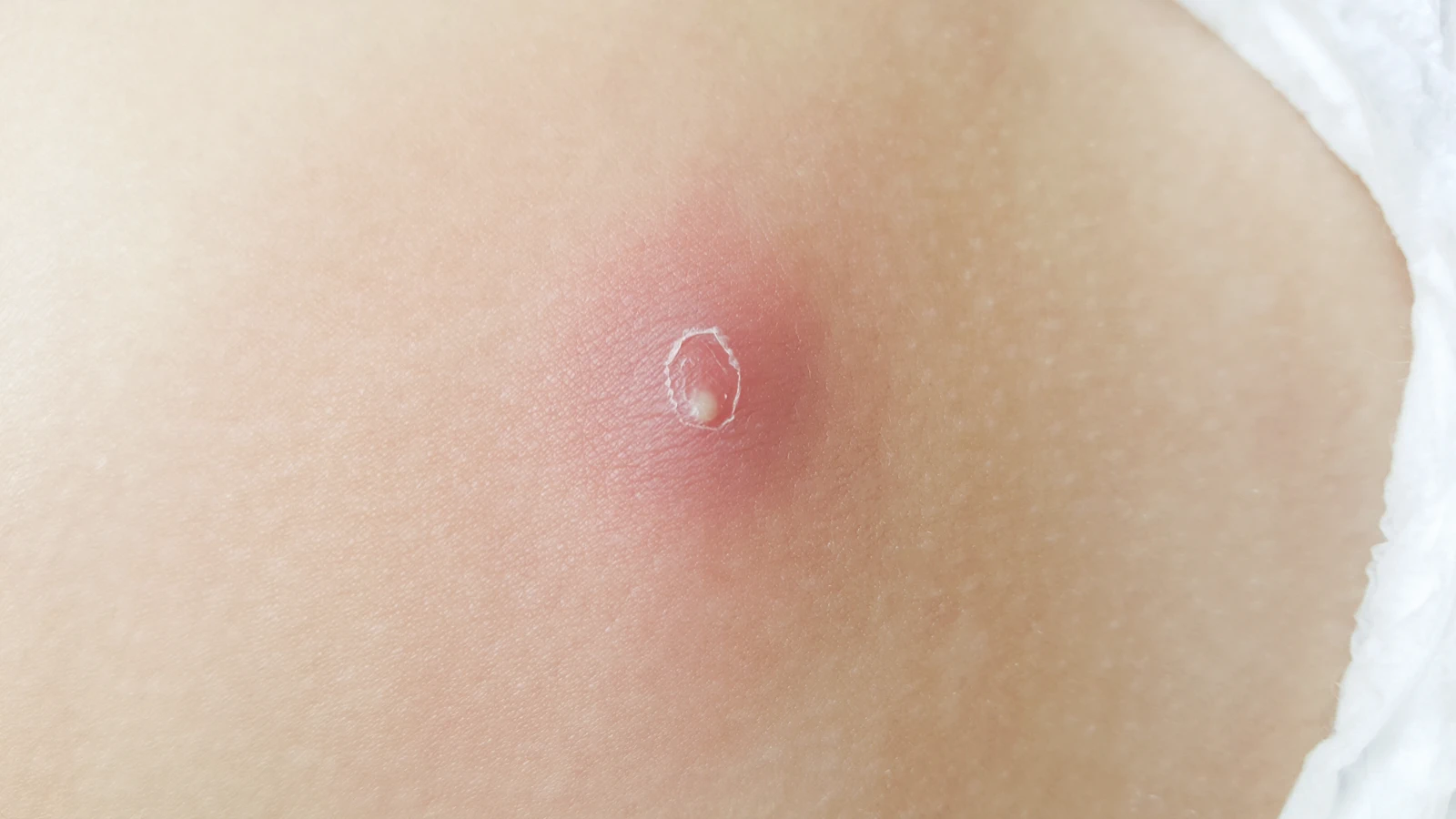
An abscess is a collection of pus enclosed by a wall of inflamed tissue, formed when the immune system corrals bacteria, dead cells and fluid into one pocket rather than letting the infection spread. On the skin it appears as a tense, hot, red swelling that becomes increasingly painful over a few days; deeper abscesses may show only fever and localised tenderness. Common sites seen in a surgical clinic are the buttock cleft, the area around the anus, the armpit, the groin and the breast.
The reason an abscess ends up with a surgeon rather than only a prescription is that antibiotics penetrate the pus pocket poorly once a wall has formed. Drainage through a small incision releases the pressure, relieves pain within hours and lets the cavity close from the bottom up. Antibiotics are added for surrounding spreading redness, fever, diabetes or a weakened immune system.
Squeezing or lancing a boil at home pushes bacteria deeper and is a frequent reason for a small abscess becoming a large one. An abscess that returns in the same spot twice points to an underlying cause, such as a fistula, a pilonidal sinus, hidradenitis or undiagnosed diabetes.

Frequently asked questions
Can an abscess heal on its own without being drained?
Why did my abscess not improve on antibiotics alone?
Where this term comes up
-
Tonsil & Adenoid Surgery
Tonsil and adenoid surgery removes the tonsils, the adenoids, or both, for recurrent infections or breathing blocked by enlarged tissue.
Further reading




