






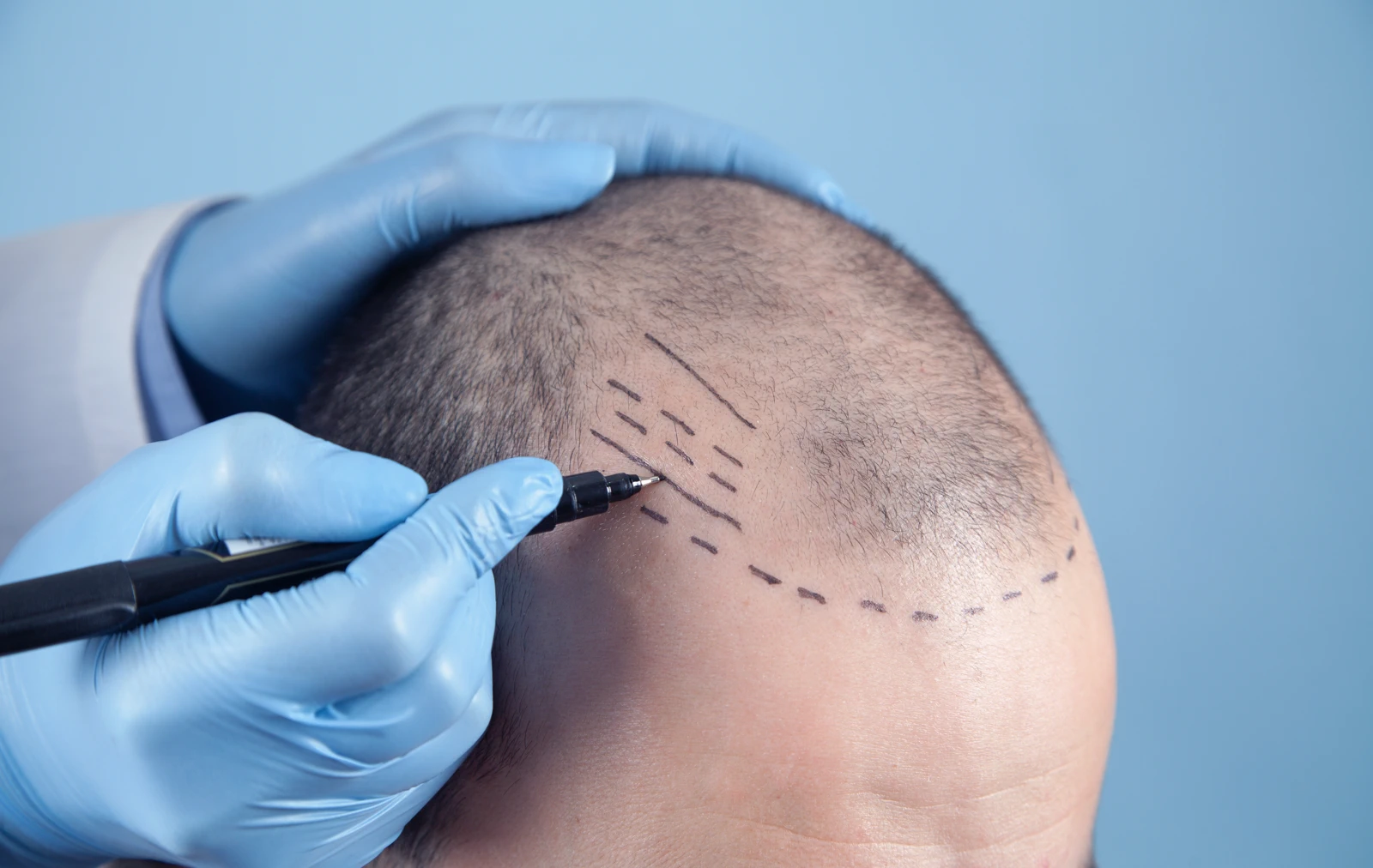






Many people research techniques first and ask about suitability later. At a good consultation, the order is reversed. Before an FUE Hair Transplant or any other method is discussed, a specialist checks whether surgery is the right step for you at all, and if so, what it can realistically achieve.
Frequently asked questions
Can women be candidates for a hair transplant?
Is there a minimum age for a hair transplant?
What if my donor area is weak?
Will I need medication after a transplant?
Typical ranges, set individually at examination
Why candidacy is decided before the technique
Techniques such as FUE Hair Transplant, DHI Hair Transplant and Sapphire FUE Hair Transplant differ in how grafts are extracted and placed. They do not change the basic facts of your scalp: how much donor hair you have, how your hair loss is progressing, and how your health may affect healing.
This is why a specialist assesses you first. A transplant can restore coverage in a natural-looking way with your own hair. It cannot create new donor hair, and it does not stop future loss in the untreated areas. Understanding both sides early helps you make a calm, informed decision.
What a specialist looks at
The assessment combines a scalp examination, your medical history and an honest conversation about goals. Each part answers a different question about whether surgery is likely to help you.
Hair loss pattern and stability
For men, the specialist often grades loss on the Norwood scale; for women, the Ludwig scale is commonly used. Patterned loss driven by DHT (dihydrotestosterone) tends to follow predictable zones, which makes planning easier. Diffuse thinning across the whole scalp, or loss that is still changing quickly, is harder to plan around and may need further investigation first.
Donor area quality and capacity
The Donor area, usually at the back and sides of the head, supplies every Graft. The specialist checks hair density, the number of hairs per follicular unit, hair calibre and how much can be safely harvested. A dense donor area allows more flexibility. A limited one means the plan must prioritise, for example the hairline over the Crown (vertex).
Scalp health and medical history
Active scalp conditions, recent illness, medications and blood tests are all reviewed. Conditions such as diabetes or high blood pressure do not automatically rule surgery out, but they need to be well controlled and discussed openly.
What the specialist assesses and why it matters
| Factor | What is checked | Why it matters |
|---|---|---|
| Hair loss pattern | Norwood or Ludwig grade, speed of change | Guides hairline design and future planning |
| Donor area | Density, calibre, safe harvest capacity | Sets the upper limit of coverage |
| Age | Likely future progression | Avoids a result that looks unnatural later |
| Medical history | Conditions, medications, blood tests | Affects safety and healing |
| Expectations | Goals compared with donor supply | Keeps the plan realistic |
Age and realistic expectations
There is no single ideal age, but timing matters. In younger patients, hair loss is often still progressing, so a low, dense hairline placed today may sit apart from new thinning behind it in a few years. A conservative Hairline design that suits your face as you age is usually the more natural-looking choice.
Expectations are discussed just as carefully. A transplant redistributes existing hair from the donor area to the Recipient area. It can improve density and frame the face. It will not usually recreate the density you had in your teens, and growth takes time to mature.
Signs that often point to a suitable candidate, and common limits
Advantages
- Patterned hair loss that has been relatively stable
- A healthy donor area with good density
- General health that is well controlled
- Goals that match the available donor supply
Disadvantages
- Rapid or ongoing shedding with no clear cause
- Limited donor hair for the area to be covered
- Untreated scalp or medical conditions
- Expectations of full, teenage-level density
Who may be advised to wait or choose another option
Being told to wait is not a refusal. It usually means the specialist expects a better, more stable outcome later, or believes another approach suits you now.
- People with Telogen effluvium, a temporary shedding often triggered by stress, illness or diet, which may settle on its own.
- Younger patients whose hair loss pattern is not yet clear.
- Those with diffuse thinning and a weak donor area.
- Anyone with an active scalp condition or health issue that needs treatment first.
For early or mild thinning, non-surgical options may be discussed. PRP Therapy uses PRP (platelet-rich plasma) from your own blood to support existing follicles; it may help some people, but it does not regrow hair in fully bald areas. Mesotherapy and Low-Level Laser Therapy can support scalp health, though results are modest and need repeated sessions, typically several over a number of months as set by your doctor.
How to prepare for a remote assessment before travelling
If you are considering treatment in Istanbul, a remote assessment lets a specialist review your case before you book travel. Good preparation makes it more accurate.
Preparing your remote assessment
- Take clear photosPhotograph the front, top, crown, both sides and the back of your head in good daylight, with hair dry and unstyled.
- Describe your historyNote when your hair loss started, how it has changed and any family history.
- List your health informationInclude medical conditions, medications, allergies and any previous hair procedures.
- Share your goalsExplain which areas matter most to you, so the specialist can prioritise realistically.
- Review the proposed planAsk about the technique, estimated graft range, recovery and written aftercare before you decide.
Find out whether a transplant suits you
Share your photos and history with our specialists for a personalised assessment and a clear plan before you travel.

Glossary
Key terms used in this article.
- Donor area
- The band of hair at the back and sides that supplies the grafts. Learn more: Donor area
- DHT (dihydrotestosterone)
- The hormone that drives pattern hair loss. Learn more: DHT (dihydrotestosterone)
- Graft
- One follicular unit, moved from the donor area to the recipient area. Learn more: Graft
- Follicular unit
- The natural grouping of one to four hairs that grow together. Learn more: Follicular unit
- Crown (vertex)
- The whorl at the top and back of the head. Learn more: Crown (vertex)
- Hairline design
- Where the new hairline is drawn, and at what angle. Learn more: Hairline design