Estecenter

Eccellenza nell'estetica.
Fiducia nella salute.

The Norwood scale, stage by stage

Every clinic you contact will ask what Norwood stage you are, and most people have no idea. The diagrams below are the fastest way to find out — look at the one that matches your hairline in a mirror, and you have the answer.

Start
  • Seven stages, drawn rather than described
  • The graft range and technique for each one
  • The number every clinic will ask you for

What each stage means

The scale describes a progression, not a diagnosis. Where you are on it matters less than how fast you got there and what your donor area looks like.

Norwood 1

The adolescent hairline is still intact. Both temples sit on the same line as the rest of the hairline and the crown is fully covered.

What is usually done

Nothing needs transplanting at this stage. If you have a family history of hair loss, a baseline photograph and a density measurement now make any future change easy to detect.

Norwood 1

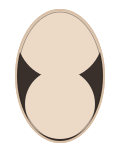
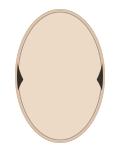
Norwood 2

The hairline has moved back a little at both temples, forming the first shallow triangles. The forehead looks marginally taller in photographs taken from the front.

What is usually done

A small, precise session is enough. DHI places single-hair grafts at the very front, which is what keeps a rebuilt temple from looking like a straight line.

Norwood 2
Grafts500 – 1,000
Sessions1
Techniquehair-dhi, hair-sapphire-fue

Norwood 3

The temples have receded deep enough to be the first stage most clinicians call pattern hair loss. The hairline now reads as a clear M.

What is usually done

One session usually rebuilds the frontal third. Ask what hairline height is being planned: a line drawn too low at this age is the most common reason a result stops looking natural later.

Norwood 3
Grafts1,200 – 1,800
Sessions1
Techniquehair-dhi, hair-sapphire-fue

Norwood 3 Vertex

The same frontal recession as stage 3, with hair at the vertex thinning independently. Two separate areas are now losing density.

What is usually done

Two areas compete for the same donor hair. Most plans prioritise the frontal line, because it frames the face, and treat the crown with a lighter density or in a second session.

Norwood 3 Vertex
Grafts1,800 – 2,600
Sessions1
Techniquehair-sapphire-fue, hair-hybrid

Norwood 4

The frontal loss is substantial and the crown has become a distinct bald area. A band of hair still bridges the two across the top of the head.

What is usually done

This is the stage where donor planning starts to matter more than technique. A good plan reserves grafts for the future rather than spending the whole donor area in one sitting.

Norwood 4
Grafts2,400 – 3,200
Sessions1
Techniquehair-sapphire-fue, hair-hybrid

Norwood 5

The band separating the frontal area from the crown has thinned noticeably. Both regions are larger than at stage 4 and are beginning to read as one.

What is usually done

Full coverage at natural density is rarely realistic here. The honest version of this plan is a strong frontal result with the crown filled to a lighter, but even, density.

Norwood 5
Grafts3,000 – 4,000
Sessions1
Techniquehair-sapphire-fue, hair-hybrid

Norwood 6

The bridge has gone and the bald areas are continuous. Hair remains on the sides and the back, which is where the donor supply comes from.

What is usually done

Plan for two sessions separated by about a year, so the donor area has time to recover. Prioritising the front and mid-scalp gives a far better everyday result than spreading grafts thinly over everything.

Norwood 6
Grafts3,800 – 5,000
Sessions2
Techniquehair-hybrid, hair-sapphire-fue

Norwood 7

The most advanced pattern: a horseshoe of hair around the sides and the back of the head, with the entire top bare.

What is usually done

The donor area, not the bald area, sets the limit at this stage. A frame-the-face plan with a conservative hairline produces a result you can live with; promises of full coverage usually cannot be kept.

Norwood 7
Grafts4,500 – 6,500
Sessions2
Techniquehair-hybrid

How to use the scale

The Norwood scale was published in 1975 and is still the shorthand every hair clinic uses, because it predicts something useful: roughly how many grafts a case will need. It is not a medical diagnosis and it says nothing about why you are losing hair.

Finding your stage honestly

Take a photograph under a bright overhead light, with dry hair, from the front and from above. Hair arranged to cover a thin area will put you a stage lower than you are, which helps nobody. The photograph is the measure, not the mirror.

What it does not tell you

Two people at stage 4 can need completely different plans. The scale describes the area to be covered; it says nothing about the donor area that has to supply it, and the donor area is what decides what is possible. A stage 6 with a dense donor area has better options than a stage 4 with diffuse thinning at the back.

The stage you will be at

Pattern loss is progressive. A good surgeon plans for the stage you are heading towards and not the one you are at, which is why a 26-year-old at stage 3 is usually advised to hold grafts back. If nobody raises this with you, raise it with them.


Not sure which stage you are?

Send us a photograph from the front and one from above. We will tell you where you sit on the scale and what your donor area can support.

Grazie!
Il Suo messaggio è stato ricevuto!
Ops! Si è verificato un errore durante l'invio del modulo.

Or just ask

One question, one answer, usually the same day. No form and no call unless you want one.

WhatsApp
1 Chatti con noi