









Glossary
Stretch marks
Stretch marks are narrow bands where deeper skin layers tear during rapid stretching, then heal as slightly depressed, often faded streaks on the abdomen, thighs, hips or breasts.
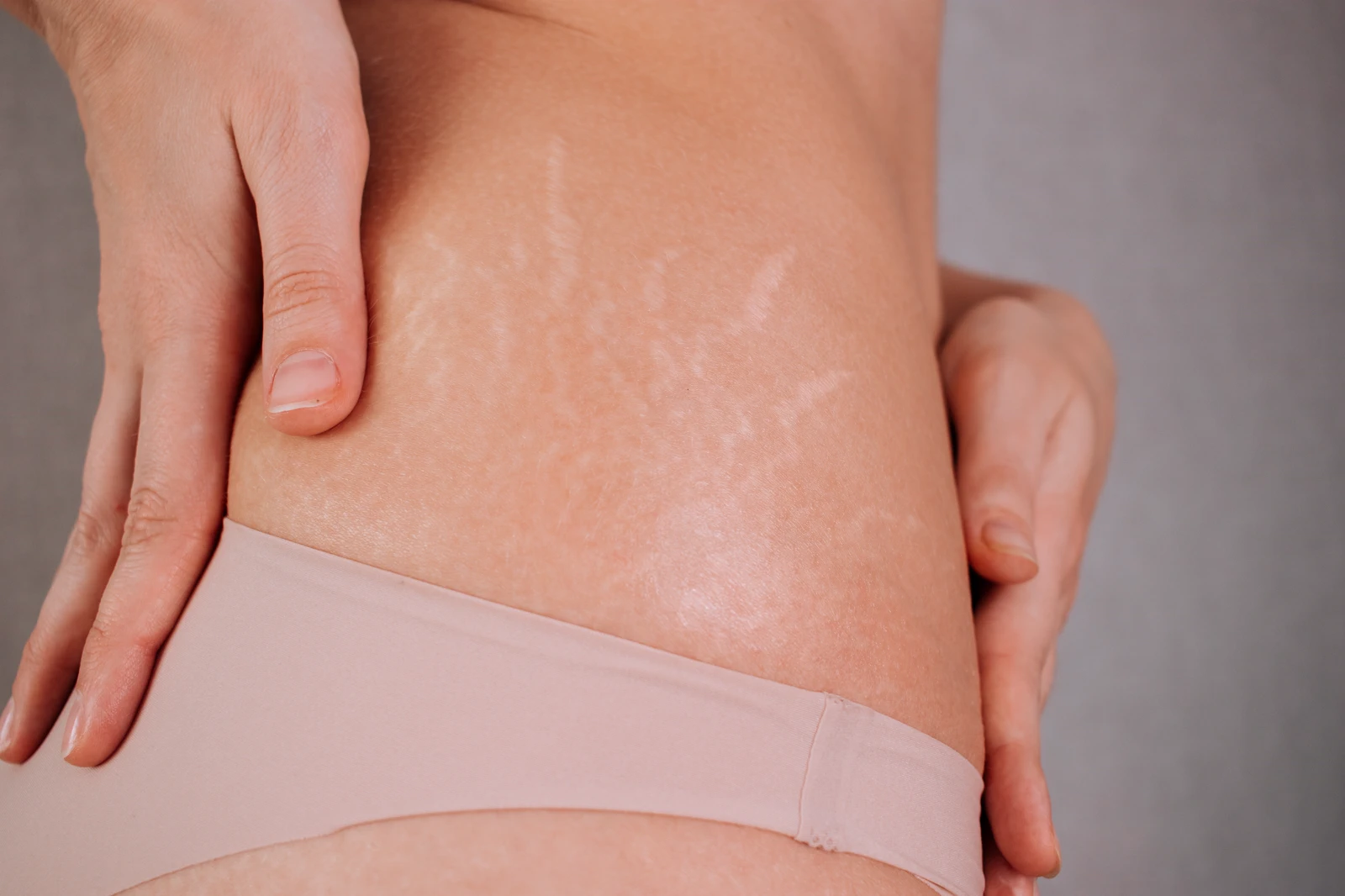
Stretch marks, also called striae, form when the dermis is pulled faster than new supportive fibres can organise, creating small parallel tears that mature into pale or violaceous streaks. Rapid adolescent growth, pregnancy weight shifts, bodybuilding gains and some endocrine or medication patterns favour their appearance.
They surface in aesthetic consultations when patients ask about laser sessions, microneedling, topical retinoids where appropriate, or camouflage after stabilised colour change. Honest expectations matter because no modality reliably erases mature marks completely; most approaches aim to blend colour, soften edges or modestly narrow the groove.
Ask whether your plan distinguishes between early red striae, where vascular treatments sometimes help, and older silvery lines that respond chiefly to fractional resurfacing. Combining therapies with sun protection and patient photographs spaced months apart keeps results measurable instead of anecdotal.

Frequently asked questions
Do stretch marks mean my skin is unhealthy or infected?
Can creams alone remove abdominal stretch marks after pregnancy?
Why does my quote list several laser passes for stretch marks?
Further reading




