









Glossary
Laser tattoo removal
Laser tattoo removal delivers ultra-short energy pulses that shatter tattoo ink particles so lymphatic cells can clear fragments over months of spaced treatments.
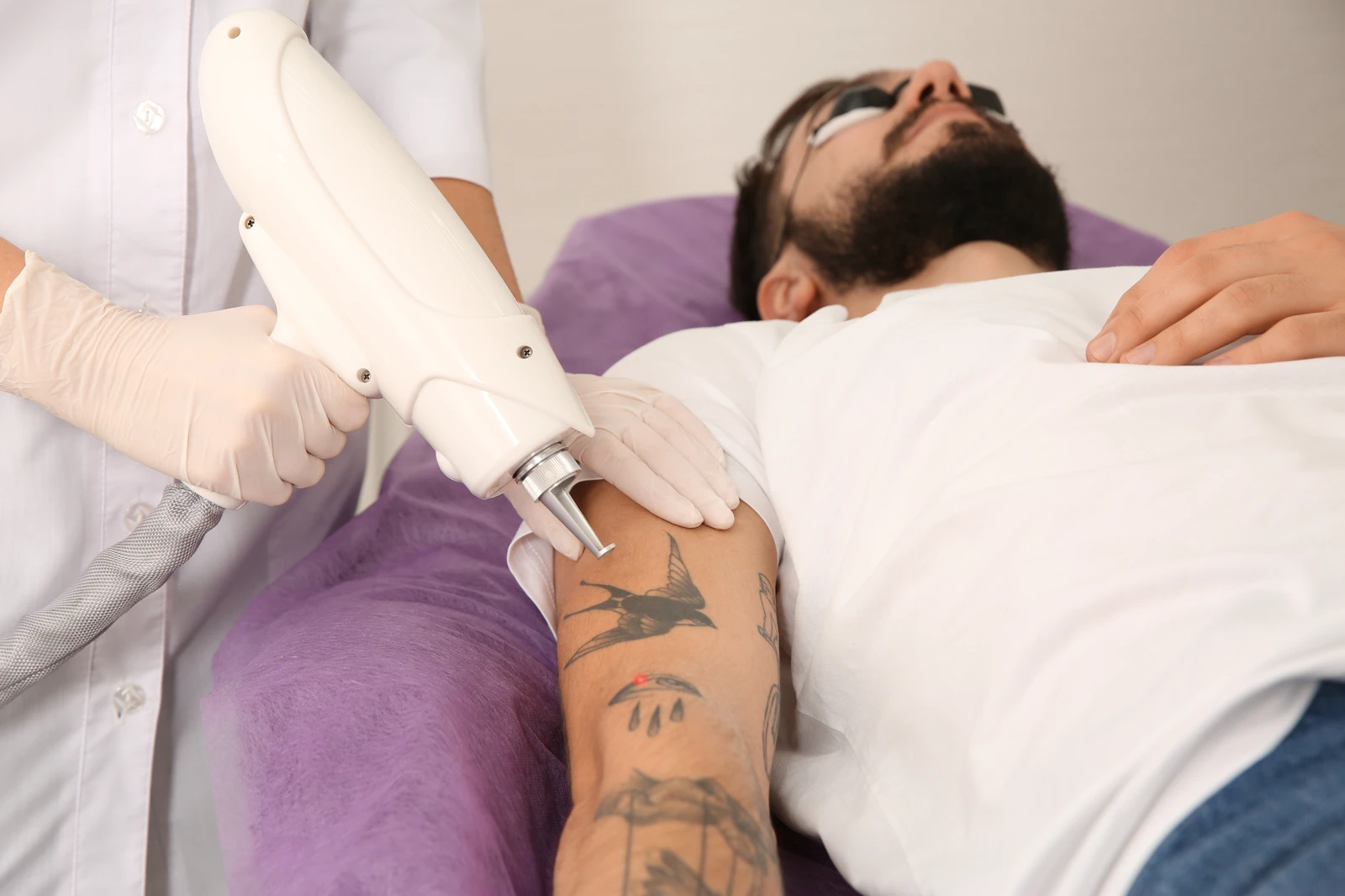
Laser tattoo removal works by choosing wavelengths absorbed by specific ink colours. Q-switched or picosecond devices emit bursts lasting nanoseconds or less, creating shock waves that crack pigment granules without heating surrounding skin excessively. Black and dark blue inks respond fastest; greens, yellows, and cosmetic pigments may need alternate lasers or more visits.
Quotes list price per square centimetre, number of passes per visit, and whether topical anaesthetic or cooling air is bundled. Blistering, temporary whitening, pinpoint bleeding, post-inflammatory darkening especially in deeper skin tones, and incomplete clearing are documented trade-offs. Amateur tattoos with surface carbon sometimes fade quicker than dense professional sleeves.
Ask how many weeks must separate sessions for your ink colour, whether sunscreen is mandatory between visits, and what signs mean you should pause for healing. Cover-up plans with fresh ink should wait until the dermatologist agrees the skin is calm.

Frequently asked questions
Will one laser session erase my tattoo completely?
Does laser tattoo removal hurt more than getting the tattoo?
Can lasering light tattoos cause ghost images?
Further reading




