









Glossary
Chronic pain after hernia repair
Chronic pain after hernia repair is groin pain that persists beyond about three months following surgery and is not explained by normal healing.
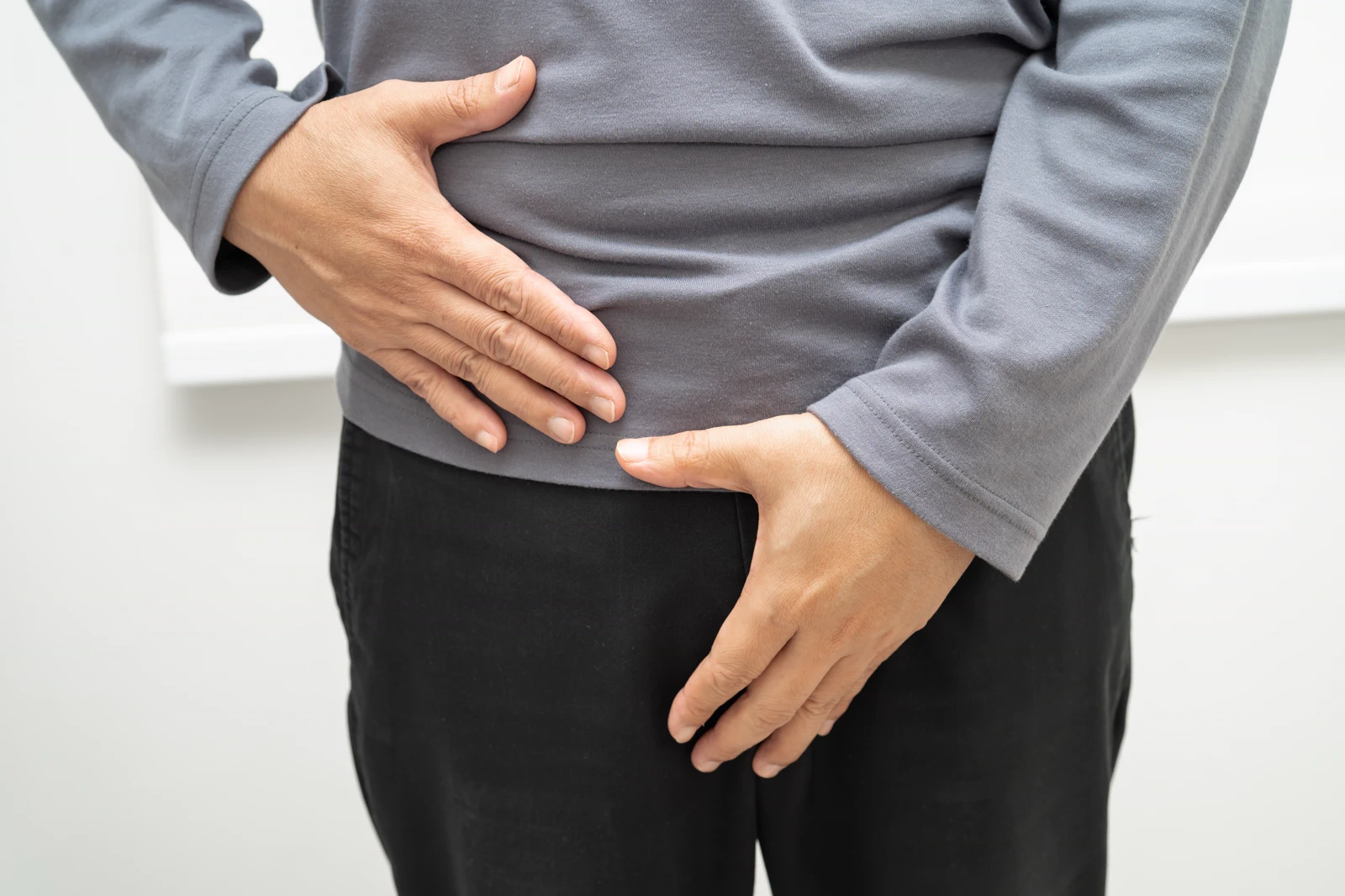
Chronic pain after hernia repair, also called chronic postherniorrhaphy pain or inguinodynia, is pain in the groin or nearby area that lasts longer than about three months after a hernia operation. Normal healing is complete by then, so ongoing pain points to another cause, most often irritation or injury of a small nerve, inflammation around mesh or stitches, or scarring.
Studies suggest that some degree of persistent discomfort affects roughly 10 to 15 percent of patients after open inguinal repair, and that pain severe enough to limit daily activity is far less common, in the order of 1 to 5 percent. It is discussed in consent forms because it is a recognised risk, and its likelihood is one reason surgeons compare open, laparoscopic and mesh-free techniques. It shows as burning, stabbing or tugging pain, sometimes with numbness, worse on movement or at the end of the day.
Before surgery, ask which nerves will be identified and protected and how the mesh is fixed. If pain develops, early assessment, nerve blocks, medication and, rarely, re-operation to remove mesh or divide a nerve are the options.

Frequently asked questions
How long is pain after hernia surgery considered normal?
Does chronic pain after hernia repair mean the mesh has failed?
Can laparoscopic hernia repair avoid chronic pain?
Further reading




