









Glossary
Breast reduction surgery
Breast reduction surgery removes gland, fat and skin to make the breasts smaller and lighter, and moves the nipple to a higher position.
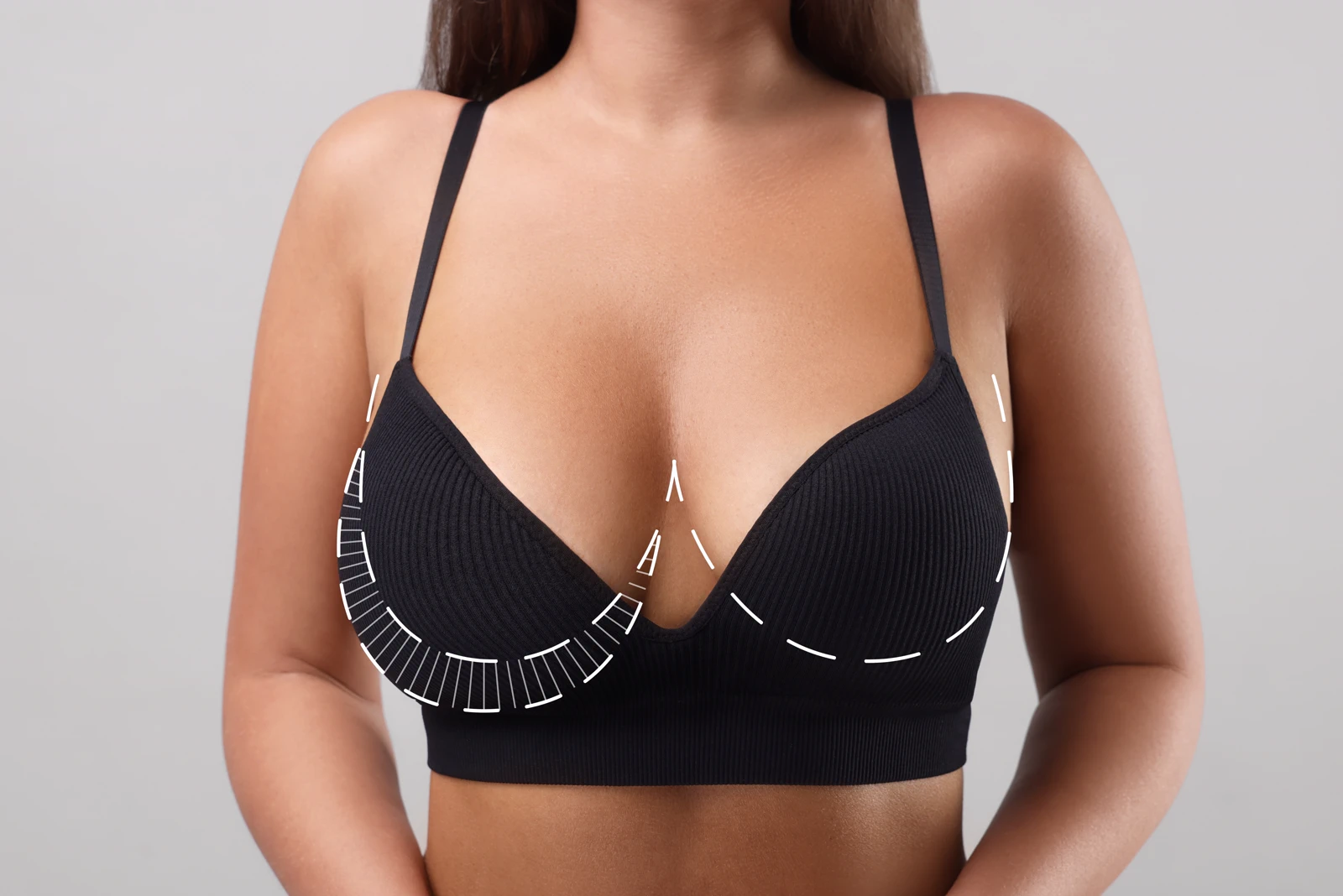
Breast reduction surgery, known medically as reduction mammaplasty, removes breast gland, fat and excess skin to leave smaller, lighter breasts, and repositions the nipple and areola higher on the chest while keeping them attached to their blood supply. The amount removed ranges from a few hundred grams to well over a kilogram per side, depending on the starting size and the goal.
It comes up for physical reasons as much as appearance: neck and shoulder pain, grooves left by bra straps, rashes under the breasts and difficulty exercising. Scar pattern is a main quote item. A vertical (lollipop) scar suits moderate reductions, while an anchor-shaped scar along the fold is used for larger ones. Very fatty breasts are sometimes reduced mainly with liposuction.
Ask what weight you can expect to lose, how the nipple stays supplied, and what the surgeon says about breastfeeding and sensation, since both can change after the operation. Some insurers set minimum tissue weights, but that rule varies by country. Final shape settles over several months, and breasts can grow again with weight gain or hormonal changes.

Frequently asked questions
Will I still be able to breastfeed after a breast reduction?
Where will the scars be after a breast reduction?
Can breasts grow back after a reduction?




