









Glossary
Ablative laser
An ablative laser vaporises the outer layers of skin in a controlled way so that new, smoother skin regrows in their place.
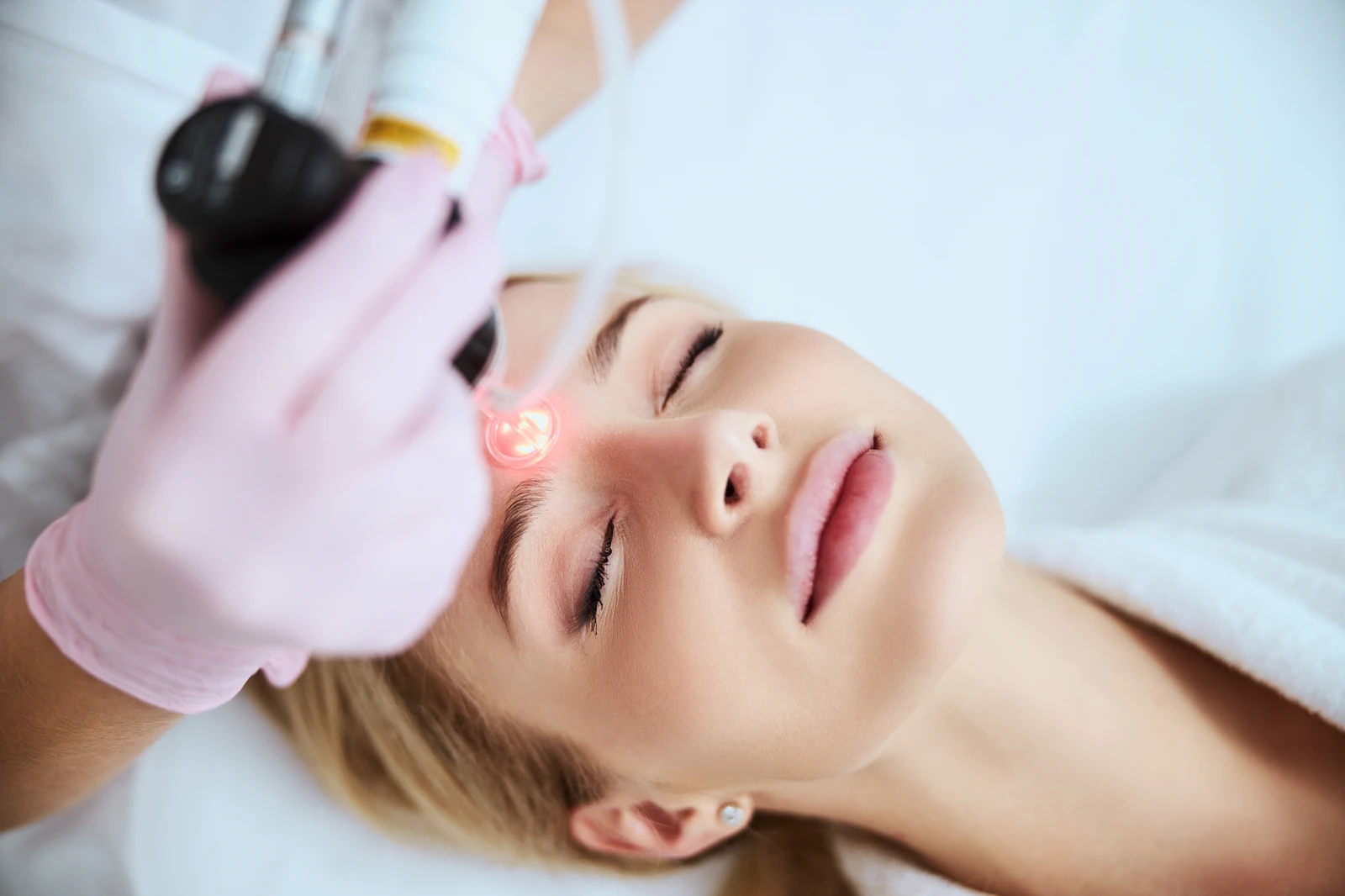
An ablative laser is a device whose beam is absorbed by the water in skin cells strongly enough to vaporise tissue, removing the epidermis and a controlled depth of dermis. The two types in common use are the carbon dioxide laser at 10,600 nm, which also heats and tightens the tissue it leaves behind, and the erbium:YAG laser at 2,940 nm, which ablates more precisely with less residual heat. Fractional versions treat only a grid of microscopic columns, leaving untouched skin between them to speed healing.
You meet the term when a clinic proposes resurfacing for deep wrinkles, acne scars, sun damage or surgical scars, because ablation offers the most visible change per session but also the longest downtime. Expect 5 to 10 days of oozing and crusting, redness lasting several weeks to months, and strict sun avoidance throughout.
Skin that tans easily carries a higher risk of post-inflammatory darkening after ablation, so phototype is the first thing to discuss. Ask whether the plan is fully ablative or fractional and at what depth, since those two settings largely determine both the result and the recovery.

Frequently asked questions
How many ablative laser sessions are usually needed?
Is an ablative laser painful?
Further reading




